
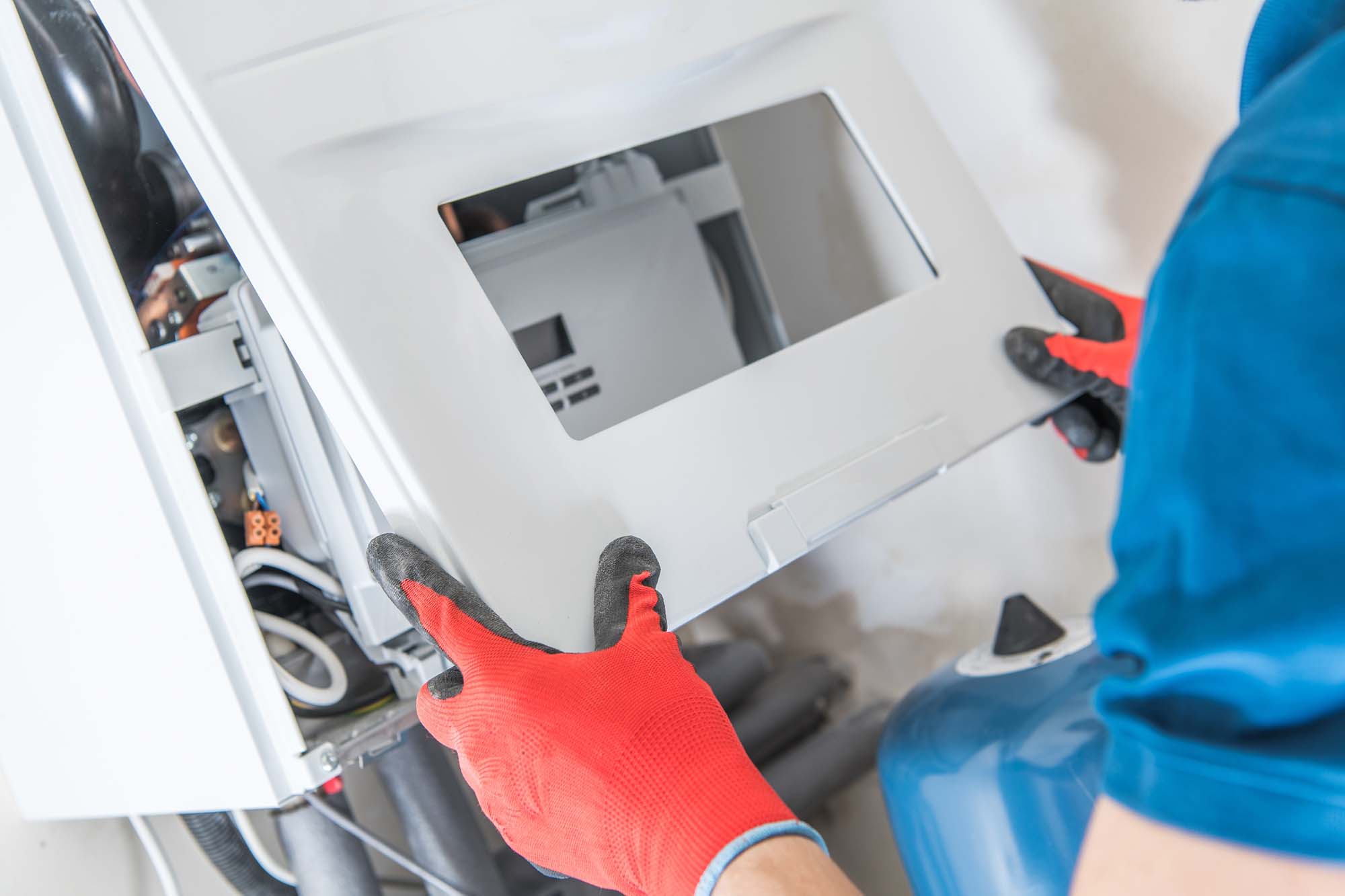
Job titles are a starting point, not proof that someone can work on every system in your home. A plumber may also be a qualified heating engineer, while a heating specialist may focus on one fuel or technology. Describe the equipment and symptom when booking, then check the competence needed for that particular job.
The distinction matters most where ordinary water pipework meets an appliance or safety system. A leaking kitchen tap and water beneath a gas boiler can look similar from a distance but call for different checks. You do not need to diagnose the fault yourself. You do need to make sure the person attending is equipped and authorised for the work.
Choose a plumber for ordinary water fittings
A plumber is usually the right starting point for leaking taps, running toilets, damaged sink wastes and accessible domestic supply-pipe repairs. Kitchen and bathroom connections also fall within plumbing, although electrics, waterproofing and structural work may need other trades. Explain whether the problem affects a single fitting, all cold outlets or the whole hot-water supply.
A general plumbing enquiry should include photographs, the fitting location and whether you can isolate the water safely. If a leak is near electrics, keep clear rather than reaching through water to operate switches. Do not ask someone to remove a boiler casing just because the visible symptom is water: appliance access can change the qualification requirements.
Choose a heating engineer for system performance
Cold radiators, circulation problems, heating controls and recurring pressure changes usually call for heating-system knowledge. The issue may involve pump performance, balancing, controls or water quality rather than one broken radiator. Tell the engineer whether hot water still works and whether the problem affects every room or only part of the house.
Not all work on radiators is gas work, but any gas work needs a Gas Safe registered engineer qualified for the appliance and fuel involved. If diagnosis leads inside a gas boiler, the appropriate registration matters. Ask at booking whether the engineer covers both the external heating circuit and the appliance, rather than assuming one appointment necessarily includes both.
Gas Safe is specific to the work
For a gas boiler, cooker or gas pipe alteration, use a Gas Safe registered engineer with the relevant categories. Check the business and engineer on the official register and inspect the engineer's identification card. The reverse lists the types of work they are qualified to do. Natural gas and LPG are not interchangeable permissions, and domestic appliance categories differ.
A plumbing qualification, heat-pump course or oil-heating credential does not replace Gas Safe registration for gas work. If you smell gas, stop treating it as a routine repair enquiry: avoid flames and electrical switches, leave the affected area and call the National Gas Emergency Service on 0800 111 999 from a safe place. Do not investigate with a flame or remove appliance covers.
Heat pumps need the right specialist team
A heat-pump problem may involve the water circuit, electrical controls, refrigerant system or building heat demand. Someone who can change a radiator may not be equipped to diagnose the heat pump itself. Give the make, model, fault display and whether the unit is a monobloc or split system if you know, without opening covers to find out.
Ask about manufacturer-specific experience and qualifications relevant to the actual work. Refrigerant work on equipment containing fluorinated greenhouse gases requires the appropriate F-gas certification; electrical work also requires suitable competence. MCS certification is relevant to installations and many funding arrangements, not a universal repair licence. Check current scheme conditions separately rather than using grant eligibility as proof that a particular repair is covered.
Unvented cylinders require safety competence
An unvented cylinder stores hot water under pressure and relies on temperature and pressure safety controls. Work on those controls, the discharge arrangement or installation needs a person competent in unvented hot-water systems, often described as holding a G3 qualification. G3 refers to English and Welsh regulations; Scottish work must meet the applicable Scottish building standards and any required warrant process.
Ask specifically about unvented-cylinder competence rather than accepting a generic heating title. Discharge through a tundish, overheating or repeated safety-valve operation needs investigation, not a cap on the outlet. Never block a discharge pipe or adjust safety devices yourself. A cylinder heated by a gas boiler can require different competencies for the cylinder work and any gas appliance work.
Oil heating and choosing the appointment
For oil boilers, seek an engineer trained and experienced in oil appliances, combustion testing and the relevant equipment. OFTEC registration is a useful competence check, but it is not Gas Safe registration and does not authorise gas work. Explain whether the fault concerns the burner, oil supply, tank or water circuit, as these can require different skills and equipment.
For budgeting, typical UK ranges might be £80 to £150 for a planned gas boiler service and £100 to £200 for an oil boiler service, with repairs and parts extra. A specialist diagnostic visit might be £80 to £200 before parts, depending on technology, travel and time allowed. Check VAT and scope. These are not Graham Oliver Plumbing & Heating prices: our work is quoted after a survey. Ask what the appointment includes before comparing totals.
Frequently asked questions
- Can a plumber repair my gas boiler?
- Only if they are also Gas Safe registered and qualified for the relevant gas appliance work. The title plumber alone does not establish this. Check the register and identification card rather than relying on an advert that mentions boilers.
- Who should I call when there is no hot water?
- Describe the system first: combi boiler, stored cylinder or heat pump. Mention whether heating works and any displayed fault. This lets the contractor assign suitable skills without asking you to dismantle equipment or guess which component has failed.
- Does G3 mean someone can repair a gas boiler?
- No. Unvented hot-water competence and gas qualifications address different work. A person may hold both, but check each where relevant. In Scotland, the cylinder installation must also comply with Scottish standards rather than relying on an English regulatory label.
- Do all heat-pump repairs involve refrigerant?
- No. Controls, water-side circulation and external pipework can cause faults too. The required competence depends on what is being worked on. Tell the specialist the symptoms, then let them establish the fault and any need for refrigerant or electrical expertise.
Discuss your plumbing requirements
Tell us what needs doing. Work and prices are confirmed after assessment, not from the indicative figures in this guide.