
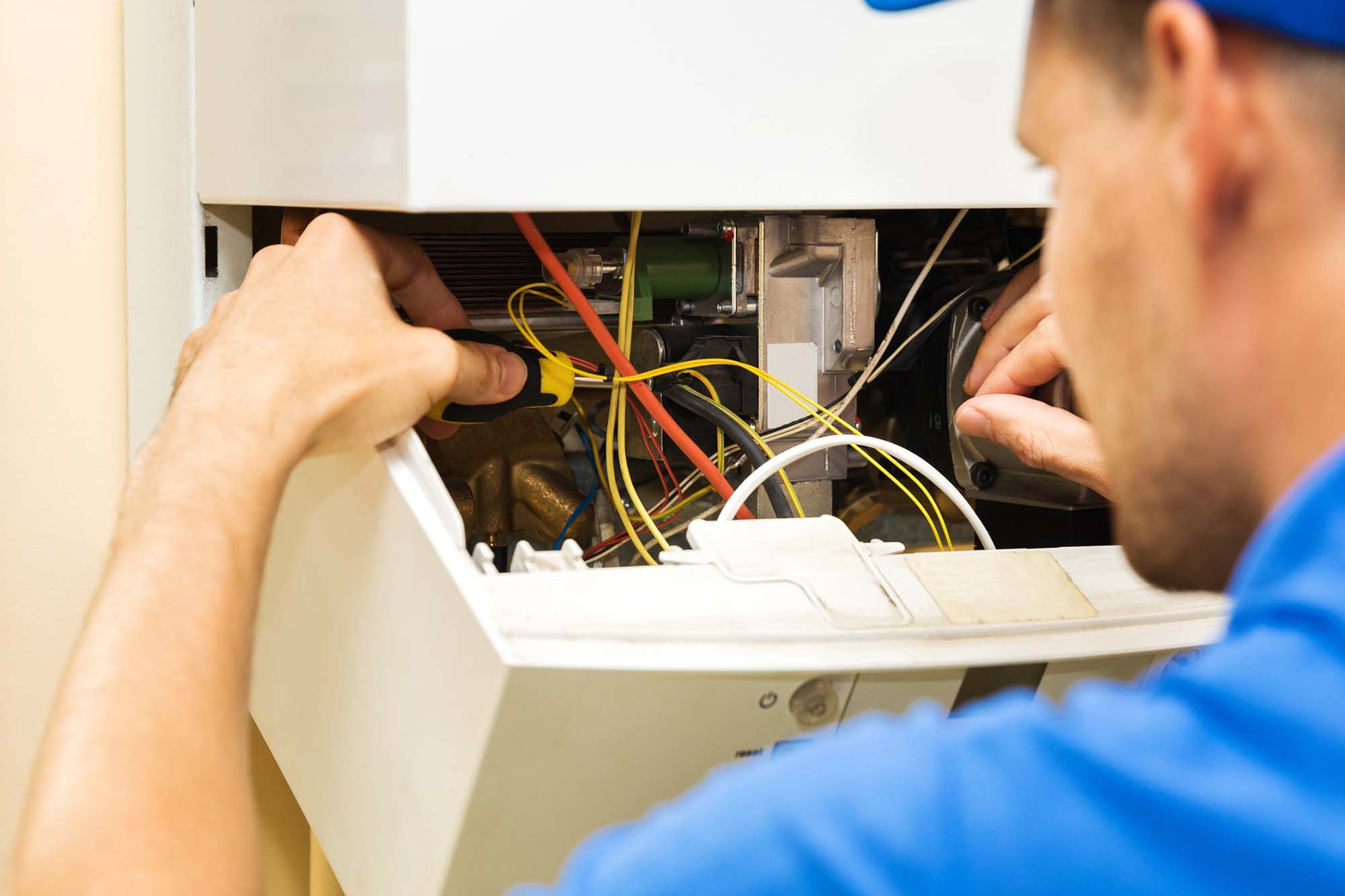
Losing heating and hot water at the same time usually points at the boiler or its controls rather than at the radiators or the cylinder. The good news is that a fair share of these calls turn out to be power, programming or pressure, all of which you can check yourself in a few minutes without removing a single cover.
Work through the list below in order and note what you find. Even if you still need an engineer, telling us the boiler make, the display reading and the pressure gauge value means we can arrive with the likely part on the van.
1. Power, fuse and display
Check the boiler has power. A tripped RCD, a blown fuse in the boiler's fused spur or a switched off isolator will stop everything. If other circuits in the house are fine but the boiler is dead, reset the breaker once. If it trips again straight away, leave it off and call us: repeated tripping means an electrical fault, not a nuisance trip.
If the display is lit but showing a code, write the code down exactly. Codes are the fastest route to a diagnosis and they are printed differently by each manufacturer.
2. Thermostat, timer and batteries
Wireless room thermostats and programmers run on batteries, and a flat battery pair looks exactly like a dead boiler. Replace them before anything else if the display is faint or blank. Then check the programmer is calling for heat: a clock that has drifted after a power cut, or a schedule left on holiday mode, is one of the most common false alarms we attend.
If you have a smart control, check it is still paired and connected. A failed pairing after a broadband change stops the boiler firing even though the app looks normal.
- Set the room thermostat several degrees above the current room temperature.
- Put the programmer into constant or boost so a schedule is not hiding the fault.
- Check the hot water schedule separately, as many controls run heating and water on different programmes.
- Turn any thermostatic radiator valve in the same room fully open while testing.
3. System pressure and the reset button
On a sealed system, look at the pressure gauge. Cold, it should normally sit between 1 and 1.5 bar. Below about 0.5 bar most boilers refuse to fire as a protection measure. If you know how to use your filling loop and your manual explains it, topping back up to 1.2 bar is a homeowner task. If pressure keeps falling, the underlying fault is a leak or an expansion vessel, not the gauge.
One reset attempt on a lockout is reasonable. Repeated resetting is not: the lockout exists because the boiler detected a condition it could not safely ignore, and forcing it to retry can turn a small repair into a replacement.
4. Gas supply, other appliances and cold weather
If you have a gas hob, check whether it lights. No gas at the hob points to the meter, the supply or a prepayment credit issue rather than the boiler. If you smell gas at any point, do not test anything further. Turn the supply off at the meter, open windows, avoid switches and call the national gas emergency line on 0800 111 999.
In a cold snap, a blocked condensate pipe is the single most common cause of a boiler stopping dead with heating and hot water lost together. Our frozen condensate guide covers thawing it safely.
Where it becomes a Gas Safe job
- Any work behind the boiler casing, including diverter valves, fans, gas valves and heat exchangers.
- A boiler that locks out again after one reset.
- Any smell of gas, sooting, staining around the case or a yellow rather than blue flame.
- Carbon monoxide alarm activation, which is an evacuate and call situation, not a diagnostic one.
Frequently asked questions
- Why have I lost heating and hot water at the same time?
- On a combi, one boiler serves both, so a single fault takes out both. On a system boiler with a cylinder, losing both usually means the boiler is not firing at all, or a shared control or valve has failed rather than the radiators or cylinder themselves.
- How many times can I reset the boiler?
- Once. If it locks out again, stop. The lockout is a protective response, and repeated resets can damage components and turn an affordable repair into a much larger one.
- Can I top the pressure up myself?
- If your boiler has an accessible filling loop and the manual explains the procedure, yes, up to around 1.2 bar cold. Close the loop fully afterwards. If you need to do it more than two or three times a year, book a diagnosis instead.
- How quickly can you attend a no heat call?
- We keep space for breakdowns and we run an out of hours line for genuine emergencies, which matters most for households with young children, elderly residents or a property left empty in freezing weather. Call 07747 002334 and we will tell you honestly when we can be there.
Still no heat after those checks?
Tell us the boiler make, any code on the display and the pressure reading, and we will arrive prepared rather than diagnosing from scratch.