
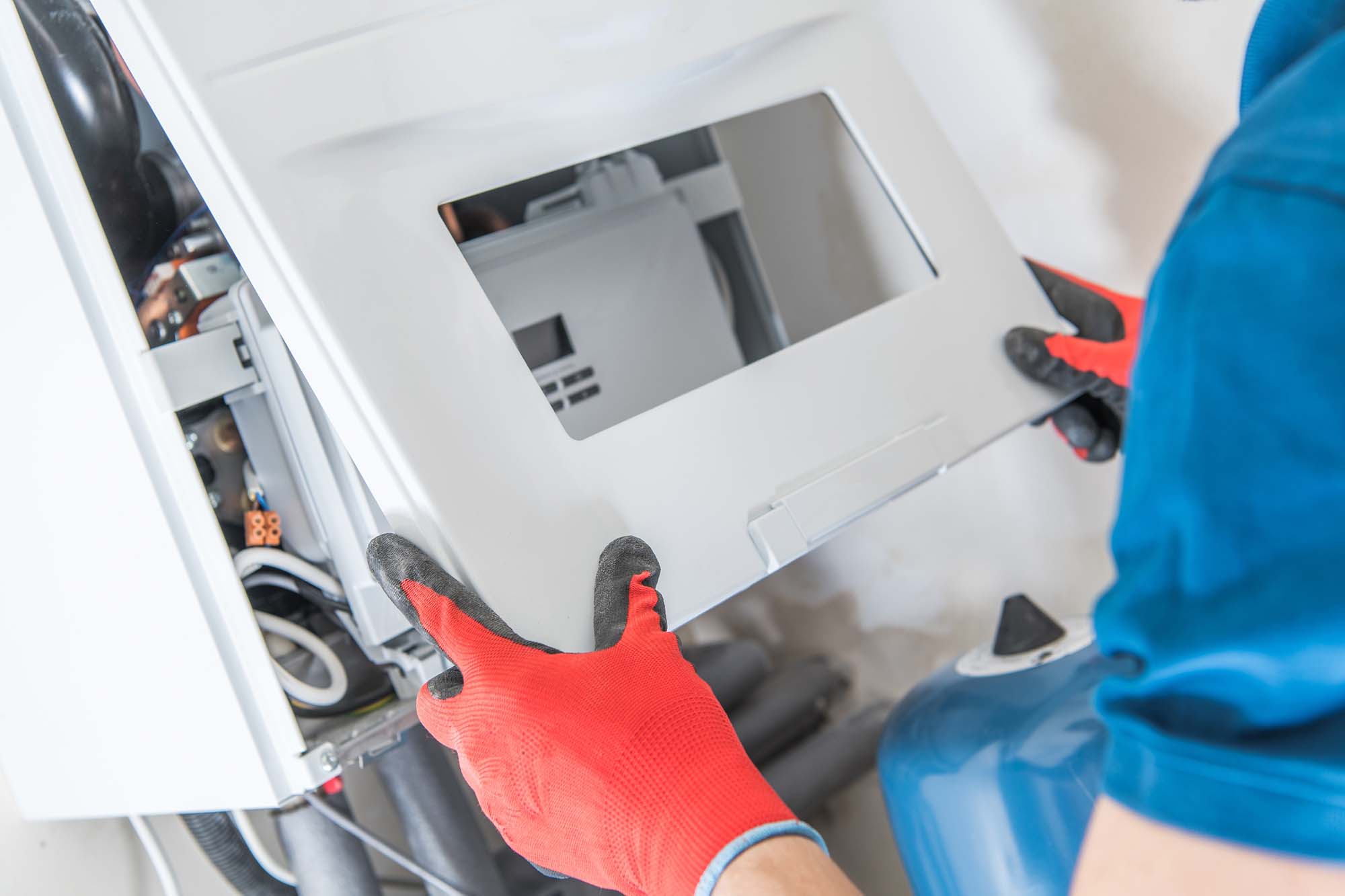
A magnetic filter catches magnetic particles circulating in heating water before they repeatedly pass through sensitive components. The black deposit often found inside is magnetite, an iron corrosion product. Collecting it can help protect pumps, valves and heat exchangers, but the filter does not stop the corrosion that produced it.
Think of the filter as one part of system care, alongside suitable cleaning, water treatment and fixing leaks or air entry. This guide explains choosing and maintaining the filter itself. It is not a promise that adding one will clear a blocked radiator, restore a damaged pump or replace a proper assessment of dirty heating water.
What a magnetic filter can and cannot remove
A strong magnet attracts ferrous debris carried through the filter body. Some designs also use a chamber, mesh or separation process to collect other dirt, but capabilities vary. Not all circulating contamination is magnetic, so read the product information instead of assuming every device captures limescale, solder residue and every type of particle equally well.
The filter will only catch material that reaches it. Sludge already settled in a radiator or lodged in restricted pipework may remain there until the circuit is cleaned. A full collector is evidence that debris has circulated, not proof that the entire system is now clean. The speed at which it fills can help guide further investigation.
Choosing a filter that suits the heating circuit
Pipe size, system flow rate, available space and acceptable pressure loss all matter. A compact filter squeezed into a convenient gap may be a poor choice if it restricts circulation or cannot be maintained. Heat pump circuits in particular need equipment selected for their design flow, rather than an assumption that any domestic boiler filter will suit.
Compare the cleaning method and replacement seal availability as well as magnetic strength claims. Check suitability for the system metals, working temperature, pressure and any glycol mixture present. Where an appliance manufacturer specifies a filter or particular water-quality conditions, the installer should check those instructions before selecting equipment. A filter marketed as universal still needs an application check.
Fitting position and service access
Many domestic heating filters are fitted on the return pipe before water re-enters the boiler, subject to the appliance and filter instructions. Flow direction and mounting orientation matter. The best location also leaves room to withdraw the magnet, operate the isolation valves and collect dirty water without splashing electrical equipment or finished surfaces.
Fitting generally requires the circuit to be cooled, isolated or drained as appropriate, and a section of pipework altered. After installation, the plumber refills and vents the circuit, checks joints and confirms circulation. A cramped installation beneath a boiler is not automatically acceptable just because the filter body fits; cleaning clearance must be considered from the start.
Boiler installations and powerflushing: different jobs
When a boiler is replaced, cleaning requirements should be assessed against the condition of the existing circuit and the new appliance instructions. A magnetic filter can help collect residual circulating debris afterwards, but cannot make a heavily contaminated system suitable merely by being added at the end. Any gas work needs a Gas Safe registered engineer.
Powerflushing is a separate cleaning process, not another name for fitting a filter. It may be appropriate where investigation shows widespread sludge and the system can tolerate the procedure. Other cleaning approaches may suit other installations. Fragile valves, old pipework or restricted microbore circuits need particular consideration. Ask why the chosen method suits your system and how the result will be checked.
Cleaning: what the maintenance visit involves
The precise procedure depends on the design. Typically the engineer lets the system cool, isolates the filter, safely releases pressure as instructed and removes collected debris into a container. Some filters discharge through a drain point; others need opening. Hot pressurised water is a scalding hazard, and undoing the wrong part can release more water than expected.
The engineer checks seals and valves, cleans the collector as instructed, reinstates the assembly and reopens the correct isolation valves. The circuit may need venting, pressure adjustment and a leak check afterwards. Never run the heating with its circulation path unintentionally closed. If you are not confident identifying the parts and following the exact manual, leave this job to a professional.
How often to check it and why inhibitor still matters
An initial inspection may be appropriate relatively soon after a dirty system has been cleaned, because residual particles can continue circulating. Later cleaning is often coordinated with routine heating maintenance, but follow the product guidance and the engineer's findings. A filter that fills quickly may need more frequent attention while the underlying cause is investigated.
Inhibitor helps limit corrosion when correctly selected and dosed. It does not dissolve every existing blockage, and the magnet does not replace it. Draining, leaks and repeated topping up can dilute treatment and introduce fresh oxygen. Ask for water condition and inhibitor concentration to be checked using an appropriate method, rather than adding bottles indefinitely without knowing what is already present.
Typical UK costs and deciding what to book
Typical UK ranges, not Graham Oliver Plumbing & Heating prices, are roughly £70 to £180 for a domestic magnetic filter supplied only and £180 to £350 for straightforward supply and fitting. Relocating pipework or overcoming difficult access can increase this. Cleaning during an existing maintenance visit may be included or carry an additional charge; a separate attendance has its own labour cost.
A domestic powerflush is a different scope and can typically range from £400 to £900 or more, depending on system size, condition and access. Ask what cleaning, chemical treatment, filter fitting and follow-up checks are actually included. Through our central heating and power-flushing services, we can assess the appropriate work and quote after a survey. Do not book a filter alone as a guaranteed cure for cold rooms.
Frequently asked questions
- Will a magnetic filter lower my heating bill?
- It may help maintain circulation and protect equipment where debris is a problem, but savings are not guaranteed. It does not improve insulation or correct poor heating controls. Any claimed saving needs a credible basis specific to the condition of the system.
- Does black water mean my boiler needs replacing?
- No. Black water can indicate corrosion products in the circuit, but it does not establish the condition of the boiler. Water testing, circulation checks and an appliance assessment help distinguish a cleaning requirement from a component fault or a replacement decision.
- Can I clean the filter myself?
- Only if the manufacturer permits homeowner maintenance and you can safely follow the exact procedure. Let the circuit cool and never guess which cap or valve to undo. If the unit is seized, leaking or inaccessible, arrange professional maintenance rather than forcing it.
- Is a filter compulsory for every boiler warranty?
- Requirements vary by manufacturer and model. Read the actual installation and warranty conditions, including cleaning, water treatment and servicing obligations. Fitting a filter alone does not establish compliance, and its presence is not a guarantee that a warranty claim will be accepted.
Discuss heating system protection
Tell us about your existing system and planned changes. Work is quoted after a survey.