
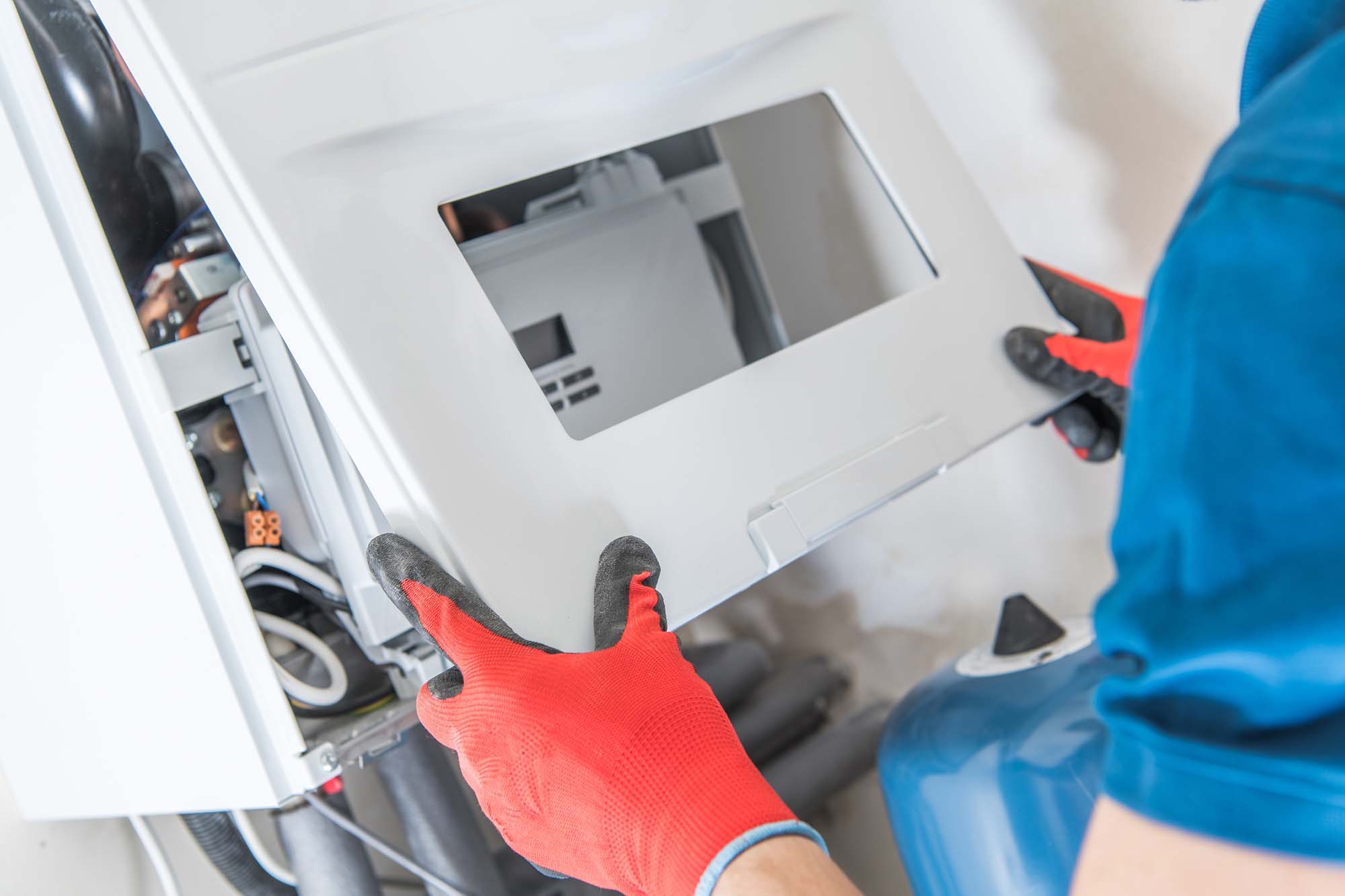
Repressurising a boiler is one of the few jobs on a heating system that's genuinely safe for a homeowner to do themselves, provided the boiler is cold and you follow the steps in order. It takes most people under five minutes once they know where the loop or key is on their particular boiler.
There are two common setups: an external braided filling loop that connects to the mains, and an internal filling key or lever built into the casing. The steps differ slightly, so check which one applies before you start.
Before you start
- Turn the boiler off, or at least let it cool down, never top up a hot system
- Find the pressure gauge, usually on the front display or a physical dial low on the casing
- Locate your filling loop or key: a silver braided hose with two small levers running under or beside the boiler, or a keyhole or small lever built into the front panel
- Have a cloth handy, a small amount of water often escapes when disconnecting an external loop
External braided filling loop
Most system and combi boilers with a separate cold feed use this type. The loop has a valve at each end. With the boiler off, open both valves slowly, you'll hear water flowing and see the pressure gauge start to climb. Watch it closely rather than walking away, it rises faster than you'd expect.
Once the gauge reaches 1.2 to 1.5 bar, close both valves again, starting with the one nearest the mains. If the loop is a flexible hose type rather than a fixed one, disconnect it from at least one end afterwards so it can't be knocked open accidentally.
Internal filling key or lever
Some boilers, more common on newer models, have the filling mechanism built into the casing rather than an external hose. This is usually a small lever you push up or a key you insert and turn a quarter turn. Hold or turn it while watching the gauge, and release the moment you hit 1.2 to 1.5 bar. These self-close when released, so there's no second valve to worry about.
Target pressure and what to do after
Aim for 1.0 to 1.5 bar cold, most manufacturers mark the ideal range with a coloured band on the gauge itself. Once you've topped up, put the boiler back on and let it fire up. Pressure will climb a little further as the water heats, that's normal.
After topping up, it's worth bleeding any radiators that have been noticeably cooler at the top than the bottom, this often follows a top-up if air has worked its way into the system. Bleed one radiator, recheck the gauge, and top up again slightly if it's dropped below 1.0 bar.
Systems without a filling loop
Older open-vented systems, the type with a header tank in the loft rather than a sealed system, don't have a filling loop at all because they top themselves up automatically via the tank and ball valve. If your system has no loop, no key, and a tank in the loft, low pressure readings work differently and usually point to a ball valve or tank issue rather than something you top up at the boiler.
How many top-ups is normal
Topping up once when you first switch the heating on after summer, or after having radiators bled or a new one fitted, is completely normal. If you find yourself doing it more than once every couple of months, that's no longer routine maintenance, it's a sign of a leak or a failing component that a top-up won't fix long term.
If it keeps happening, get an engineer to look rather than making repressurising a weekly chore, the underlying cause is usually a quick fix once found.
Frequently asked questions
- What pressure should my boiler be at after topping up?
- Aim for 1.0 to 1.5 bar when the system is cold. Most gauges show this as a green band, with red either side indicating too low or too high.
- Do I need to turn the boiler off before repressurising?
- Yes, always let it cool or switch it off first. Topping up a hot system risks a sudden pressure spike and, potentially, scalding water at the loop connection.
- My filling loop won't close properly, what should I do?
- Stop and don't force it. A valve that won't seal fully will let pressure creep up on its own afterwards, and it's a simple part for an engineer to replace.
- How often should I need to repressurise my boiler?
- Once every few months at most, typically after bleeding radiators or at the start of the heating season. More frequent than that suggests a leak or failed expansion vessel.
- My system doesn't have a filling loop, why not?
- Older open-vented systems top up automatically from a header tank in the loft rather than a sealed loop, so there's nothing to connect at the boiler itself.
Prefer to have it done properly?
If you're not comfortable topping up yourself, or it keeps dropping again, we're happy to take care of it.