
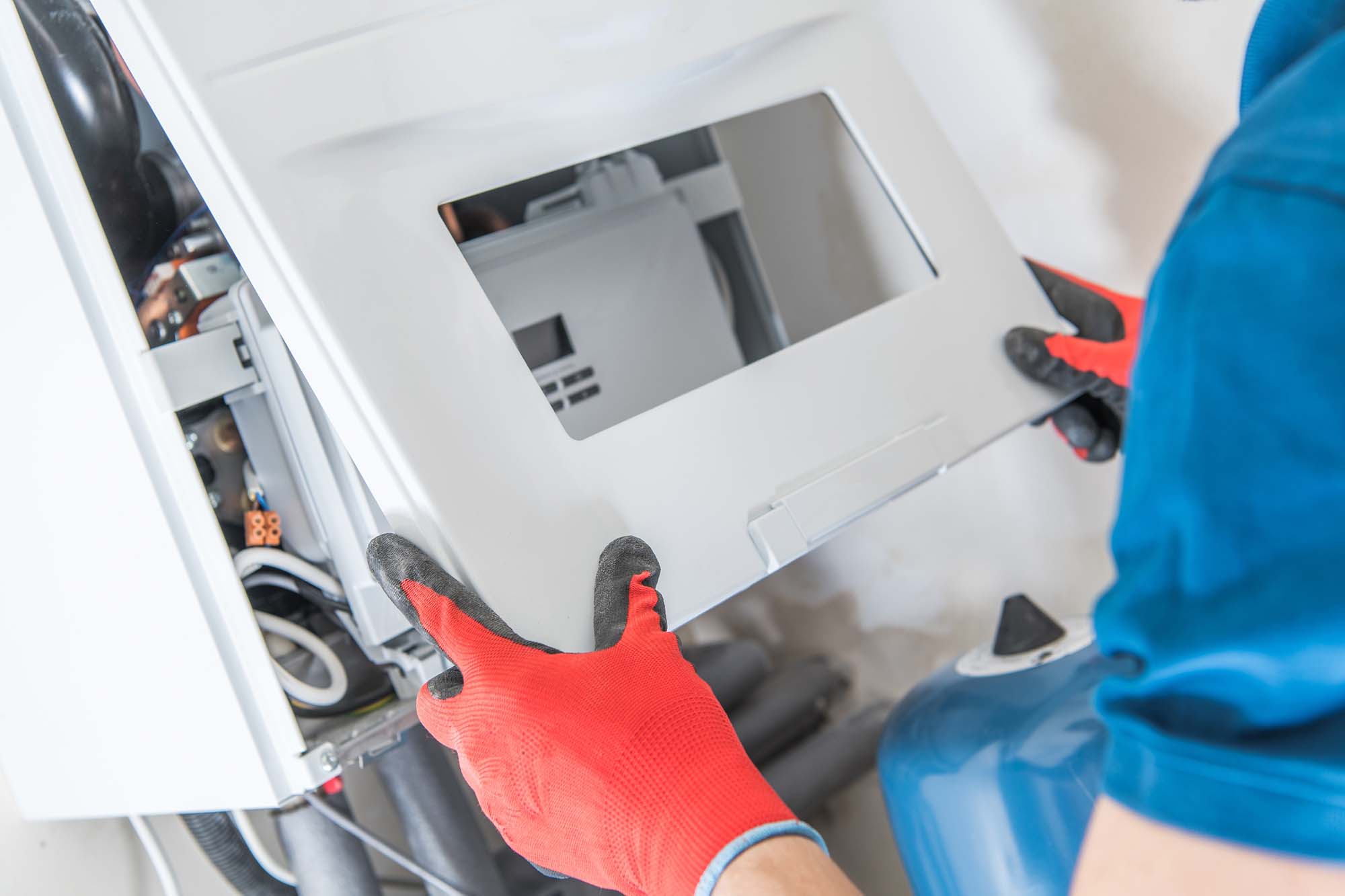
If radiators near the boiler get hot quickly while those at the far end of the house stay lukewarm, the system may be out of balance. Hot water takes the easiest path, so radiators with the shortest pipe runs take more than their share. Balancing restricts the flow to those radiators so water reaches the rest.
It is a job many homeowners can carry out themselves with patience, a radiator key or spanner and ideally a thermometer. This guide explains the method, what to check first and when the problem is something other than balance.
Check this before balancing
- Bleed every radiator, starting downstairs, so air is not the problem.
- On a sealed system, check boiler pressure after bleeding and top up only if needed.
- Make sure all thermostatic radiator valves are fully open during balancing.
- Confirm a cold radiator is not cold at the bottom only, which suggests sludge.
- Turn the heating on and let it run from cold so you can see how radiators warm.
Understanding the two valves
Each radiator normally has two valves. One is the control valve, often a thermostatic valve with a numbered head, that you adjust day to day. The other, at the opposite end, is the lockshield valve, covered by a plain cap. The lockshield sets how much water can pass through the radiator and is the one used for balancing.
Remove the cap and you will see a spindle that turns with a lockshield key or small spanner. Count turns carefully and write them down so you can return to the starting point if needed.
The balancing method
With the heating off and cool, open every lockshield valve fully, counting turns. Turn the heating on and note the order in which radiators start to warm; the first ones are closest to the boiler in pipe terms.
Turn the lockshield on the quickest radiator almost closed, then open it a quarter turn. Move to the next fastest and open it slightly more. Continue through the house, opening valves progressively more as you move away from the boiler, with the slowest radiators left fully open.
If you have a thermometer, aim for the pipe going into each radiator to be roughly 10 to 12°C hotter than the pipe coming out once the system is up to temperature. Make small adjustments and give the system time to settle between changes.
Common mistakes
- Adjusting the thermostatic valve instead of the lockshield.
- Making large changes and not waiting for the system to settle.
- Closing a lockshield completely, which shuts the radiator off.
- Balancing with some TRVs closed, which gives misleading results.
- Forgetting to record the original settings.
When balancing will not solve it
If a radiator stays cold at the bottom, sludge is likely. If it is cold at the top, air or gas is the probable cause. A whole system that heats slowly may have a failing pump, a blocked filter or an undersized boiler setting. Single rooms that never reach temperature, even when the radiator is hot, may simply have a radiator too small for the room.
Microbore systems and complex older layouts can also be difficult to balance by hand. An engineer can measure temperatures across the system and identify the cause.
Balancing after changes
Rebalance after adding or replacing radiators, fitting a new boiler or extending the system. Many installers balance as part of commissioning a new boiler or heat pump. For heat pumps in particular, balancing is important because the system relies on steady, even flow at low temperatures.
Once balanced, leave lockshields alone and use thermostatic valves and the room thermostat for everyday control.
Safety and practical notes
Radiators and pipes become hot during balancing, so use gloves. Lockshield spindles can weep slightly when turned after years untouched; a small drip usually stops, but persistent leaks need a new valve gland or replacement. If a valve will not turn, do not force it, as old valves can snap.
A simple record sheet
Before you start, make a list of every radiator by room, with columns for the original lockshield turns, the order in which it warmed and the final setting. It sounds fussy, but if something goes wrong or you need to rebalance later, you will not be starting from scratch. Keep the sheet with your boiler paperwork.
Balancing with thermostatic valves and smart controls
Thermostatic and smart radiator valves control room temperature, not system balance. They close as a room warms, which changes flow elsewhere, so a badly balanced system can still feel uneven even with good controls. Balance the lockshields first with all heads fully open, then refit or reset the heads. Some systems benefit from an automatic bypass valve so the boiler always has enough flow when most valves have closed.
Smart valve systems sometimes report radiator temperatures in their apps, which can be a helpful check after balancing.
Is it worth doing?
Yes. A balanced system heats the house more evenly, lets the boiler run steadily and often feels warmer at the same thermostat setting.
Frequently asked questions
- How do I know my system needs balancing?
- Radiators nearest the boiler heat fast while distant ones remain cool, even after bleeding.
- Do I need special tools?
- A lockshield key or small spanner. A clip-on or infrared thermometer makes it more accurate.
- How long does balancing take?
- An hour or two for a typical house, including time for the system to heat between adjustments.
- Should a new boiler installation include balancing?
- It should be part of good commissioning, along with cleaning and setting controls.
Want your heating looked at properly?
Tell us what your radiators and boiler are doing. We confirm the work needed and the price after we have assessed the system.