
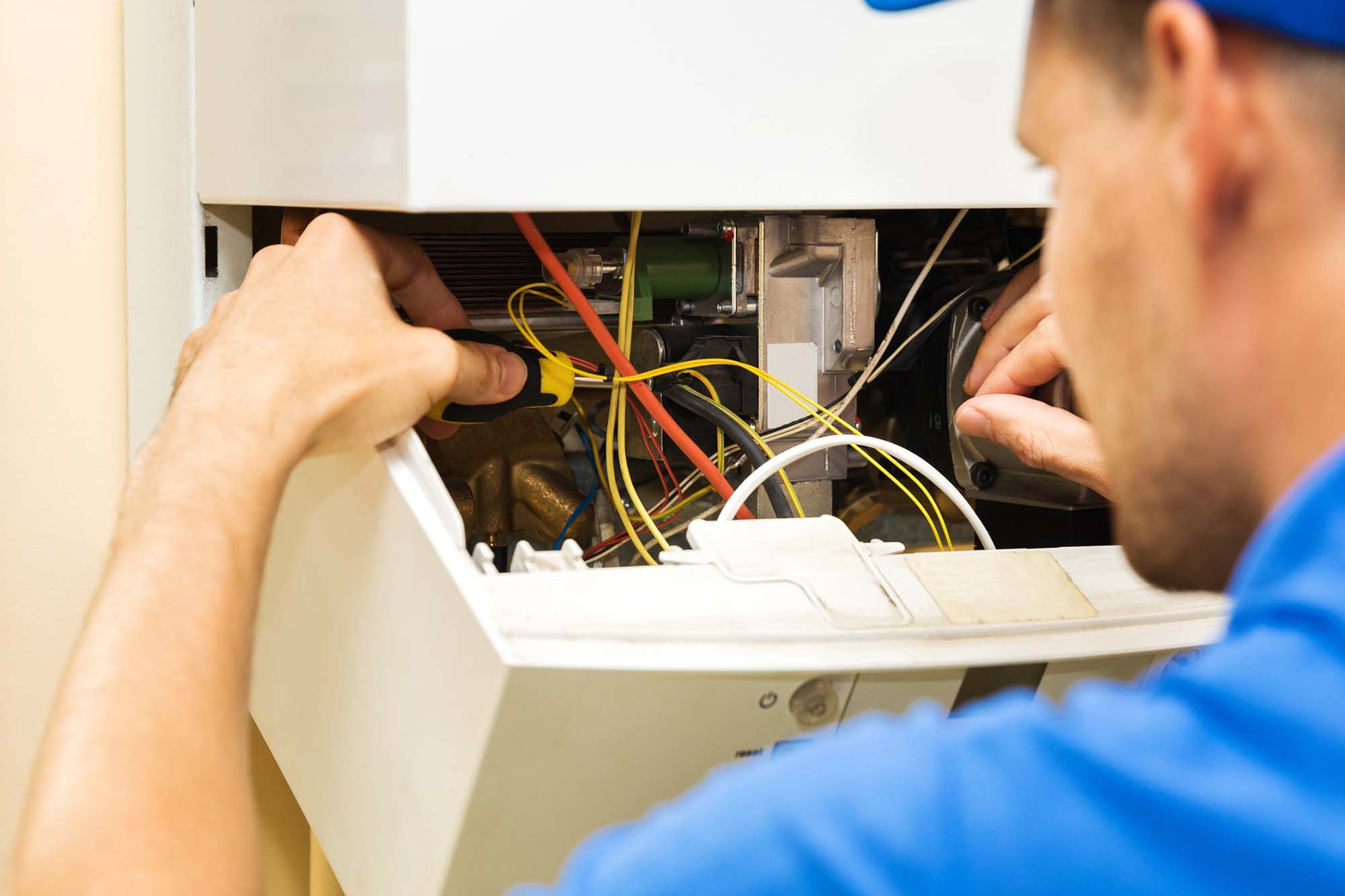
A radiator that's completely cold, not partially, is a different fault to one that's just cold at the top or bottom, and it points to something stopping water reaching it at all. Rather than guessing, it's worth working through checks in a sensible order, starting with the simplest and cheapest to rule out.
This checklist runs through each likely cause for a single stone-cold radiator, then separately for a whole floor or zone staying cold, since the causes differ.
Step 1: check the TRV pin isn't stuck
Thermostatic radiator valves work by a wax or liquid-filled element pushing a small pin down to control flow. If a radiator has been turned off, or set to zero, for a long time, that pin can stick in the closed position even once you turn the dial back up. Remove the plastic TRV head, exposing the metal pin underneath, and gently push it in and out with a small flat tool. If it was stuck, it should move with a little resistance and pop back out; refit the head afterwards.
Step 2: check the lockshield hasn't been closed
The lockshield valve, at the opposite end from the TRV, sets the balance of flow through that radiator and is normally left alone once a system's been balanced. If it's been fully closed, deliberately or accidentally, no water reaches the radiator at all. Remove the plastic cap and check with a small spanner that it's open, at least partially, rather than fully shut.
Step 3: consider whether it's an air or sludge problem
If the radiator is partially warm, follow the bleeding and sludge checks in our other guides. If it's completely stone cold with no warmth at all anywhere on the panel, air and sludge are less likely to be the sole cause, and it's worth moving down this list.
Step 4: check a whole floor or zone, not just one radiator
If every radiator on one floor is cold while the rest of the house is fine, the fault likely sits upstream of the radiators themselves, most commonly a zone valve that's failed to open, a faulty room thermostat for that zone, or a programmer setting. If both floors are affected but the boiler is firing and hot water still works, suspect the central heating pump.
Freeing a stuck TRV pin, step by step
A pin that's genuinely seized rather than just stiff needs a slightly more deliberate approach than a quick prod. Turn off the heating first so the system isn't under pressure from circulation, then unscrew the plastic TRV head fully anticlockwise until it lifts away, leaving the brass valve body with the small pin protruding from its centre.
Using a pair of slim pliers or a suitable flat tool, grip the pin gently and work it in and out with steady, repeated movements rather than a single hard push, since a seized pin often needs several attempts before the corrosion or built-up deposit around it breaks free. A light tap with the handle of a screwdriver on the side of the valve body can help dislodge it if it still won't budge. Once it moves freely under light finger pressure, refit the head, set it to a mid position, and check the radiator warms within twenty minutes.
If the pin won't move at all even with these steps, or moves but springs straight back to the closed position, the valve itself has likely failed internally and needs replacing rather than freeing, which is a job for an engineer since it involves draining that radiator.
Balancing with a digital thermometer
Beyond simply checking a radiator gets warm, proper balancing checks how warm the flow and return pipes are relative to each other, using a clip-on digital pipe thermometer or even an infrared thermometer pointed at the pipe just before it enters and leaves the radiator.
The target is a temperature drop, or delta T, of roughly 10 to 12 degrees Celsius between flow and return once the radiator's been running for ten minutes or so. A much smaller drop, say 2 or 3 degrees, means water is passing through too quickly and the lockshield needs closing slightly. A much larger drop, well above 15 degrees, means the lockshield is too restrictive and needs opening a touch. Adjustments should be small, a quarter turn at a time, with a few minutes' wait between each to let the temperature settle before checking again.
This step matters most on systems with several radiators of different sizes, where without it the nearest or largest radiators tend to hog the flow and starve the ones further round the circuit.
Testing the pump, zone valve and wiring centre
If the checklist points toward the pump, a quick way to sense it running is to place a hand on the pump body while the heating calls for heat; a working pump has a faint hum and a slight vibration. Total silence and no vibration, alongside cold pipework either side, suggests it isn't running at all, which could be electrical rather than mechanical.
A zone valve that hasn't opened often gives itself away with a humming or buzzing motor noise that never resolves into the valve fully turning, sometimes alongside an error light on the valve's actuator head. Wiring centres, the small junction box that routes signals between the programmer, thermostats, valves and boiler, can develop loose or corroded connections over years, and a fault here can mimic a valve or pump problem by simply failing to send the call for heat in the first place.
None of this testing beyond the visual and audible checks described here should be attempted without isolating electrical supplies first, and any wiring centre or valve motor replacement should be left to a qualified engineer.
Whole floor cold versus a single radiator cold: different logic
It's worth being clear-headed about which pattern you're actually dealing with before working through fixes, since the two point in very different directions. A single cold radiator, with every other radiator in the house heating normally, is almost always local to that radiator: a stuck TRV pin, a closed lockshield, or trapped air specific to that unit.
A whole floor, or a distinct zone, staying cold while the rest of the house is fine points to something shared by every radiator on that circuit, most likely a zone valve, a thermostat controlling that zone, or a blockage at a manifold or distribution point feeding that area. Chasing an individual TRV when the real fault is a zone valve wastes time, so matching the pattern to the right branch of this checklist first saves an unnecessary amount of trial and error.
When it's a system fault rather than a radiator fault
Some symptoms point away from any single radiator or valve and toward the boiler or system as a whole. If pressure on the boiler gauge has dropped noticeably, if the boiler is showing a fault code, or if hot water has also stopped alongside the heating, the problem sits at system level rather than at an individual radiator, and no amount of bleeding, balancing or valve checking downstream will fix it.
Similarly, if radiators heat unevenly across the whole house in a way that changed suddenly rather than gradually, that's more consistent with a pump or system fault than with sludge building up over time, since sludge tends to cause a slow decline rather than an overnight change.
Frequently asked questions
- How do I know if it's the pump rather than a single valve?
- A failing pump usually means no radiators in the house heat up, or heating is very slow to come through across the board, even though the boiler fires and the hot water tap runs hot as normal. A single stuck valve only affects the radiators fed by it.
- Can a thermostat cause one radiator to stay cold?
- A room thermostat controls the whole heating circuit or a zone, not an individual radiator, so it wouldn't normally explain just one radiator being cold while its neighbours work fine. A TRV issue is far more likely for a single radiator.
- What does a zone valve fault look like?
- Typically one whole zone, often a floor, stays cold while the rest of the house heats normally. Sometimes you can hear the valve's motor humming without the valve actually opening, which is a sign it needs replacing.
- Is it safe to keep checking things myself, or should I stop at a point?
- The checks in this guide, TRV pins, lockshield position and bleeding, are all safe DIY tasks. Anything involving the pump, zone valves, wiring or the boiler itself should be left to a Gas Safe registered engineer.
Worked through the checklist and still cold?
If none of these steps bring the radiator back to life, it's time for a proper diagnosis. We cover Kelso, the Borders and East Lothian.