
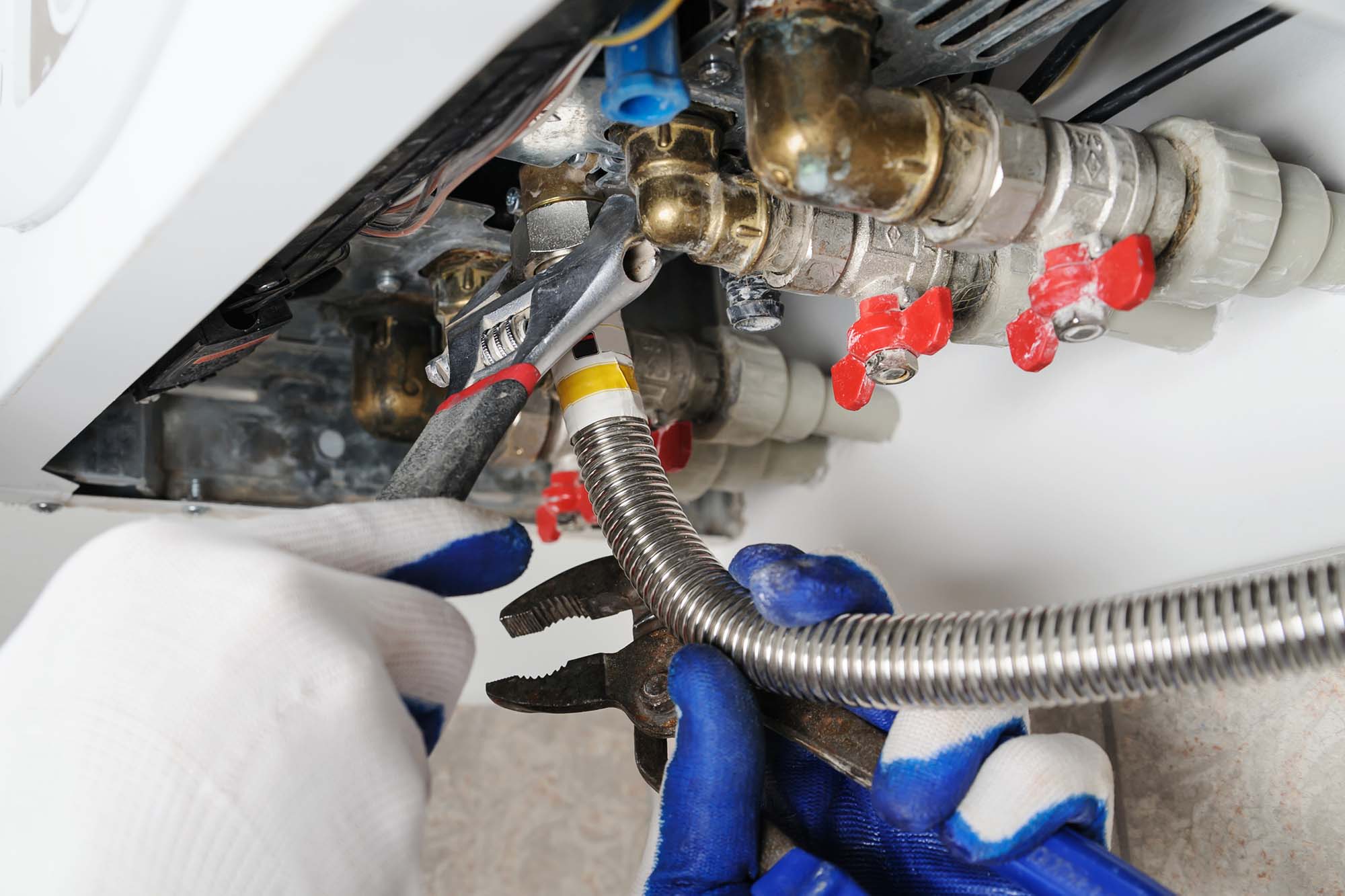
If your boiler is leaking water, stop using it and switch it off using its normal controls, provided these are dry and safe to reach. Keep away from wet electrical fittings. Catch a small drip in a container only if you can do so safely, move belongings away and contact an engineer. Do not remove the casing, tighten internal fittings or keep topping up the pressure to hide the leak.
A leak does not automatically mean a new boiler. A pipe joint, seal or pressure-control fault may be repairable, while a damaged heat exchanger can require a more substantial decision. The useful first step is identifying where water appears without opening the appliance. Water can travel along a pipe before it drips, so the wettest spot is not always the source.
Safe checks before you call
Read the pressure gauge without touching anything wet and note whether the boiler was heating, producing hot water or standing idle when the drip started. A photograph of accessible pipework and the display can help explain the problem. Do not restart the boiler simply to reproduce the leak. If water is near a socket, switch or wiring, keep clear and seek advice rather than reaching through it to turn something off.
If you know the correct water isolation valve and can reach it safely, isolate the affected supply. Turning off the incoming mains may limit a domestic-water leak, but it does not instantly empty a sealed heating circuit. Do not turn unidentified valves beneath the boiler, cap a discharge pipe or isolate safety devices. Tell the engineer what you have switched off and whether the dripping continues.
Water from a pressure relief pipe
A sealed heating system has a pressure relief valve that discharges water if pressure becomes too high. Its discharge pipe commonly ends outside, separately from the plastic condensate drain. Dripping there can follow excessive filling, an expansion vessel problem or a valve that no longer closes properly. The pressure reading and whether discharge happens during heating are useful clues, not a diagnosis on their own.
Never block the outlet to stop the drip. That pipe is part of the safety arrangement. Repeatedly adding water can make the discharge worse and introduces fresh water into the heating system. Our pressure-loss guides explain the wider causes of a falling gauge; this guide focuses on water you can actually see.
Pipe joints, pump seals and the heat exchanger
Accessible joints below the boiler can leak because a seal or connection has deteriorated. Inside the appliance, pump seals and other water-side components may also fail. Water appearing at the bottom of the casing does not tell you which component is responsible: it may have run down from somewhere higher up. Leave the casing in place and describe the location rather than trying to reach the source.
The heat exchanger transfers heat to the water. Damage or corrosion there can produce an internal leak, sometimes alongside repeated pressure loss. Confirming this needs an appliance inspection. A gas boiler must be opened and worked on by a Gas Safe engineer qualified for the appliance, even if the symptom looks like ordinary plumbing.
Condensate is different from a heating-water leak
A condensing boiler normally produces condensate, which leaves through a dedicated drain, usually plastic. Water escaping from a damaged or disconnected condensate joint is not the same fault as a leaking heating pipe. A blockage can also interrupt normal drainage and stop the boiler. Note whether the water is around the plastic drain or a metal connection, but do not dismantle either to investigate.
Condensate is slightly acidic, and the surrounding surface can be damaged if it keeps escaping. Do not assume a clear drip is harmless or bypass the drain to keep the boiler running. An engineer can distinguish normal drainage from a failed connection and check that the route remains suitable.
Repair or replacement?
A sound boiler with an available replacement seal, valve or joint may be a sensible repair. The decision changes if an expensive component has failed, corrosion is extensive, parts are unavailable or there are several recurring faults. Ask for the cause, the proposed repair and any limitations to be explained before deciding, rather than treating the presence of water as proof that everything needs replacing.
Graham Oliver Plumbing & Heating services and repairs major boiler makes. Use the servicing and repairs page for the wider service or the boiler repair page for a breakdown enquiry. If the damp patch is away from the boiler and there is no visible drip, the hidden-water-leak guide covers a different investigation.
Frequently asked questions
- Is a leaking boiler dangerous?
- It can be, particularly if water reaches electrical parts or a safety device is involved. Stop using the boiler, keep away from wet electrics and arrange an inspection. A water leak alone does not establish a gas leak, but it should not be ignored.
- Why is water dripping from the pipe under my boiler?
- It may be a leaking joint, condensate connection or discharge pipe. The pipe material, location and pressure reading help an engineer distinguish them. Do not dismantle fittings or block a discharge outlet.
- Can a leaking boiler be repaired?
- Often a seal, valve or connection can be repaired or replaced. A damaged heat exchanger, extensive corrosion or unavailable parts may make replacement more sensible. Inspection comes before that decision.
- Should I keep topping up a leaking boiler?
- No. Repeated filling masks the fault and can worsen a pressure-related discharge. Note the gauge reading, stop using the boiler and ask an engineer to find the cause.
Arrange help with a leaking boiler
Describe where the water appears and the pressure reading, if you can see it safely. Leave the casing closed.