
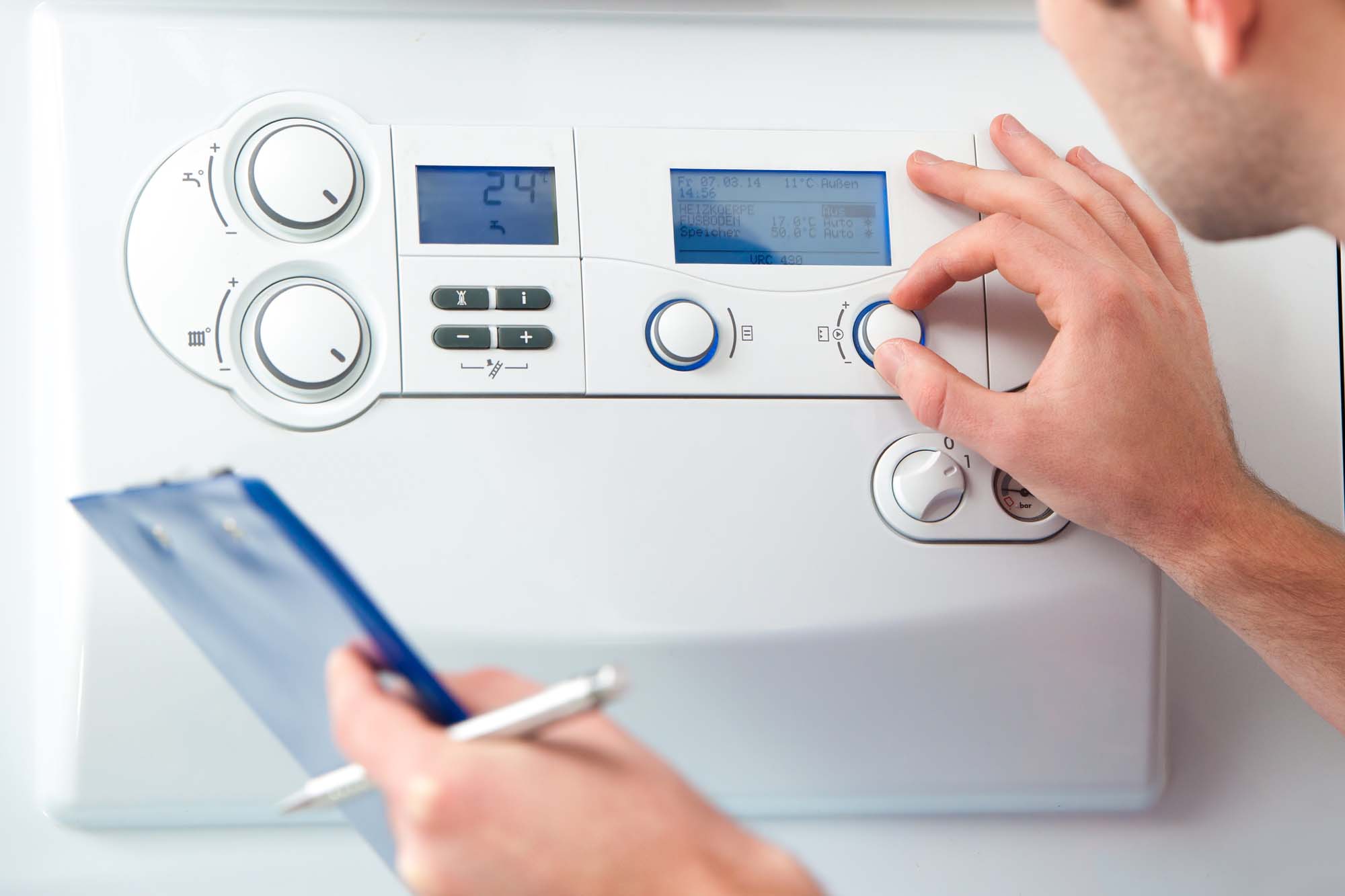
Most boilers have a dial or setting for the temperature of the water sent to the radiators, called the flow temperature. Many are set high, often at 70 to 80°C, from the factory or by habit. Lowering it can help a modern condensing boiler work more efficiently, without necessarily making your home colder.
This guide explains what flow temperature is, why it matters, how to adjust it safely and when it is not the right thing to do. It applies to the heating setting; hot water settings on cylinders are a separate matter with their own safety considerations.
What flow temperature means
The flow temperature is how hot the water is when it leaves the boiler towards the radiators. The return temperature is how hot it is when it comes back. The room thermostat controls when heating runs; the flow temperature controls how hot the radiators get while it does.
Higher flow temperatures heat rooms faster, while lower ones heat more gently and take a little longer.
Why lower temperatures help condensing boilers
Condensing boilers extract extra heat from flue gases by condensing water vapour, but they only condense well when the water returning to the boiler is cool enough, roughly below 55°C. At high flow temperatures, the return is often too hot for much condensing to happen, so the boiler runs less efficiently than it could.
Lowering the flow temperature lowers the return temperature, allowing the boiler to condense more of the time. The exact benefit depends on the boiler, the system and the house.
How to find and change the setting
Do not open the boiler casing. The flow setting is a user control; anything requiring panels to be removed is work for a Gas Safe registered engineer on gas appliances.
- Look for a radiator symbol dial or button on the boiler front, or check the user manual.
- Some boilers show settings on a digital display, others use numbers on a dial.
- On boilers with smart controls or weather compensation, flow may be set through the controller.
- Change one thing at a time and give the house a few days to settle.
Settings to try
A common starting point is around 60°C for heating. If the house stays comfortable in typical weather, try reducing further, perhaps towards 55 or 50°C. In very cold spells you may need to raise it again. Rooms will warm more slowly, so you may need to start the heating a little earlier.
If one or two rooms struggle at a lower setting, the radiators there may be undersized. That is useful information, especially if a heat pump is in your future plans.
When it is not suitable
- Older non-condensing boilers gain little from lower settings.
- Some system boilers heating a hot water cylinder need a higher temperature for the cylinder, set separately.
- Homes with undersized radiators may struggle to stay warm.
- Vulnerable occupants who need rooms warm quickly should not be left cold.
Hot water cylinders and legionella
If you have a hot water cylinder, do not reduce its stored temperature below safe levels. Stored hot water is normally kept at 60°C or heated to that temperature regularly to control legionella bacteria. On combi boilers the hot water setting is separate from the heating flow temperature and affects tap temperature and scalding risk.
Better controls make a bigger difference
Weather compensation adjusts flow temperature automatically depending on the outside temperature, and load compensation adjusts it based on how far the room is from its target. Both help condensing boilers and are available on many modern boilers and controllers. A heating engineer can check compatibility and set them up as part of a service or controls upgrade.
What to expect from your bills
Savings vary with the boiler, the system and how the home is used, so treat any figure you read online as a rough guide. The surest sign the change is working is a boiler that runs steadily, keeps rooms comfortable and condenses more of the time.
Signs the setting is too low
If the house takes too long to warm up, some rooms never reach their target, or the boiler runs for very long periods without the home feeling comfortable, the flow temperature may be too low for your radiators and insulation. Raise it in small steps until comfort returns. Each house has its own sweet spot, and it may differ between autumn and midwinter.
Preparing for a heat pump
Running a boiler at lower flow temperatures for a winter is a useful trial if you are considering a heat pump. Heat pumps work best at around 35 to 50°C. If your home stays comfortable at a boiler flow of 50°C or so, it suggests the radiators may be close to suitable. Rooms that struggle highlight where radiator upgrades or insulation would be needed. A proper heat loss survey is still required before a heat pump installation.
Ask at your next service
If you are unsure what your boiler's settings do, ask the engineer during the annual service. They can explain the controls, check whether the boiler supports weather compensation and suggest settings that suit your system.
Frequently asked questions
- Will lowering the flow temperature make my house colder?
- Not necessarily. Rooms heat more slowly but can reach the same temperature. Very cold weather may need a higher setting.
- Is it safe to adjust the flow temperature?
- Yes, using the user controls. Do not open the boiler casing.
- Does this apply to combi boilers?
- Yes, for the heating setting. The hot water setting on a combi is separate.
- Can I lower my cylinder temperature too?
- Be cautious. Stored hot water should be kept or heated regularly to around 60°C to control legionella.
Worried about your boiler or gas appliances?
Tell us what you have noticed. We confirm what is needed and the price after an engineer has checked the system.