
Our heating season is long, our properties are frequently exposed, and a good proportion of housing here sits off the gas grid with pipework running through unheated lofts, steadings and outbuildings. That combination produces a very predictable pattern of December and January callouts, almost all of which were preventable in October.
This is the checklist we would work through on our own houses. None of it is complicated and most of it is free.
Pipework and frost protection
- Lag every pipe in the loft, garage, outbuilding and any underfloor void — including elbows, tees and valves, which are usually the bits left bare.
- Insulate the cold water tank and its pipework, but leave the loft insulation out from directly under the tank so warmth from the house below reaches it.
- Lag the boiler condensate pipe wherever it runs outside, and check it is the correct diameter and falls continuously. Undersized external condensate pipes are the single most common freeze failure we attend.
- Isolate and drain outside taps, and disconnect hoses before the first frost.
- Check that pipe runs in exposed north-facing walls or through unheated porches are protected.
- Locate your stopcock, turn it to check it moves freely, and label it.
The autumn heating service
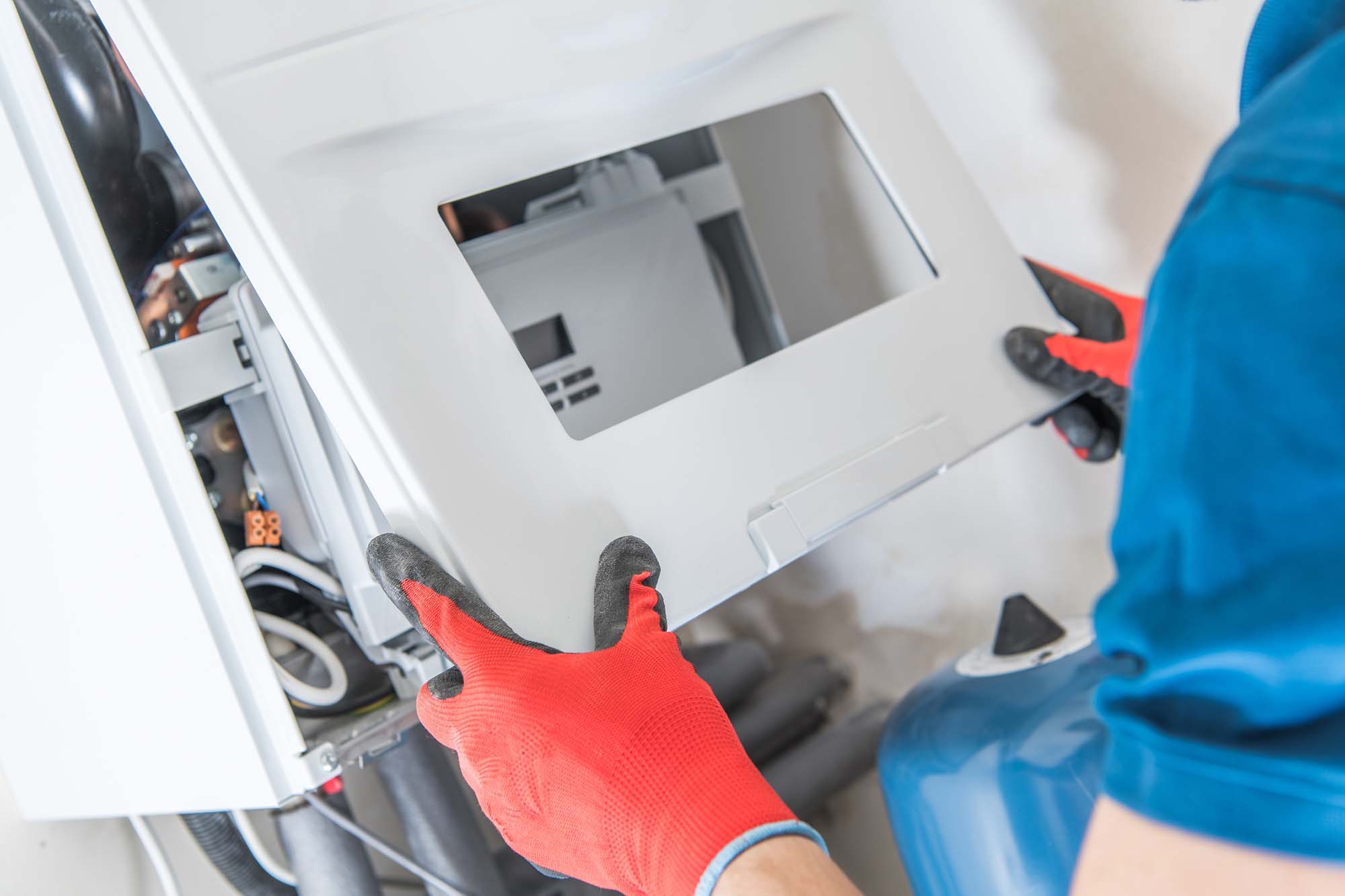
A service before the heating season starts is worth far more than one in April. It catches the components that fail under load — a tired pump, a weak expansion vessel, a marginal fan, a partially blocked condensate trap — before the appliance is asked to run twelve hours a day in a hard frost.
It also keeps your warranty valid if the appliance is a newer one, and it is the point at which we can check inhibitor levels and clean the magnetic filter. Booking in September or October means you get a chosen appointment rather than a queue position behind everyone whose heating has already failed.
Autumn checklist by system type
| System | Key autumn checks | Timing |
|---|---|---|
| Gas boiler | Service, condensate lagging, pressure, filter clean | September – October |
| Oil boiler | Service, nozzle and filter, tank level and condition | September – October |
| LPG | Service, tank level, regulator check | September – October |
| Air source heat pump | Service, clear coil and airflow, check defrost drainage | Autumn, before frosts |
| Hot water cylinder | Check insulation, immersion working as backup | Any time before winter |
| Radiators | Bleed, balance, check TRVs move freely | First cold week |
| Controls | Reset timings for shorter days, check thermostat batteries | Clock change |
| Empty or holiday property | Set frost protection or drain down entirely | Before first frost |
Radiators and controls
Turn the heating on for an hour in September rather than discovering a problem in November. Feel every radiator: cold at the top means air, cold at the bottom means sludge, and a cold radiator with a hot pipe usually means a seized thermostatic valve pin.
Seized TRV pins are extremely common after a summer sitting open. Take the head off and press the pin — if it does not spring back, tap it gently and work it free. It is a two-minute fix that prevents a cold bedroom in January.
Reset the programmer for winter hours, and check the thermostat batteries. A dead battery in a wireless thermostat is one of the most common reasons for a heating callout in the first cold week.
Oil-heated properties
- Order oil early. Prices and delivery lead times both move against you once the first cold snap starts and everyone orders at once.
- Check the tank for splits, bulging, and staining or ground discoloration underneath.
- Check the bund if you have one, and clear standing water from it.
- Replace or check the tank filter and have the burner nozzle and filter changed at service.
- Make sure the delivery route is passable — a tanker cannot reach a tank up an unploughed farm track.
- Note your usual usage so you can spot an unexplained drop that might indicate a leak.
Empty properties and holiday lets
A property standing empty through a Borders winter needs a decision: heat it or drain it. Leaving it cold with water in the pipes is what produces the ruinous ones.
If heating it, leave the system running at a low background temperature continuously rather than in short bursts, keep internal doors open so warmth reaches loft hatches and cupboards, and arrange for someone to check it after any severe cold spell. If draining it, drain fully — mains, cylinder, heating if it is not being used, and WC cisterns — and leave taps open.
For holiday lets, put the stopcock location and the heating instructions in the welcome pack, and set frost protection on the controls so a guest cannot turn the heating off entirely on departure in January.
Small jobs with a big return
- Draughtproof letterboxes, keyholes and gaps at skirtings — cheap, quick and immediately noticeable in a stone house.
- Fit chimney balloons in unused flues, but never in a flue serving an appliance.
- Top up loft insulation to full depth and make sure it is not compressed by stored boxes.
- Check the loft hatch is insulated and draughtproofed; it is often the biggest single hole in the ceiling.
- Clear gutters and check downpipes, because overflowing water on an external wall makes it colder and wetter all winter.
- Bleed radiators and then check the boiler pressure, which usually drops after bleeding.
If something does fail
Know in advance who you would call and have the number saved. In a cold snap, the difference between calling on the first morning and calling on the third is usually several days of waiting, because everyone calls at once.
We cover Kelso, Melrose, Galashiels, Duns, Coldstream, Jedburgh, Haddington, Dunbar, North Berwick and the villages between, and we prioritise vulnerable households and properties with no heat at all.
Frequently asked questions
- Should I leave the heating on low all the time in winter?
- For an occupied, reasonably insulated house, heating to a schedule is generally more economical. For an empty property or during a severe cold spell, continuous low-level heating is the better protection against freezing.
- What temperature protects against frozen pipes?
- Keeping the house above around 12 to 15 degrees, with internal doors open so the warmth reaches lofts and cupboards, is the usual guidance. Pipes in a cold loft still need lagging regardless.
- When is the best time to book a service?
- September or October. You get your choice of appointment and any faults are found before the appliance is under winter load.
- My condensate pipe froze last year. Can it be prevented?
- Usually yes. Reroute it internally where possible, or increase the diameter, ensure a continuous fall and insulate it properly. A repeat freeze means the installation needs correcting rather than just thawing again.
Get the heating checked before the first frost
Autumn services across the Borders and East Lothian for gas, oil and heat pump systems, with condensate and frost protection checked as standard.