
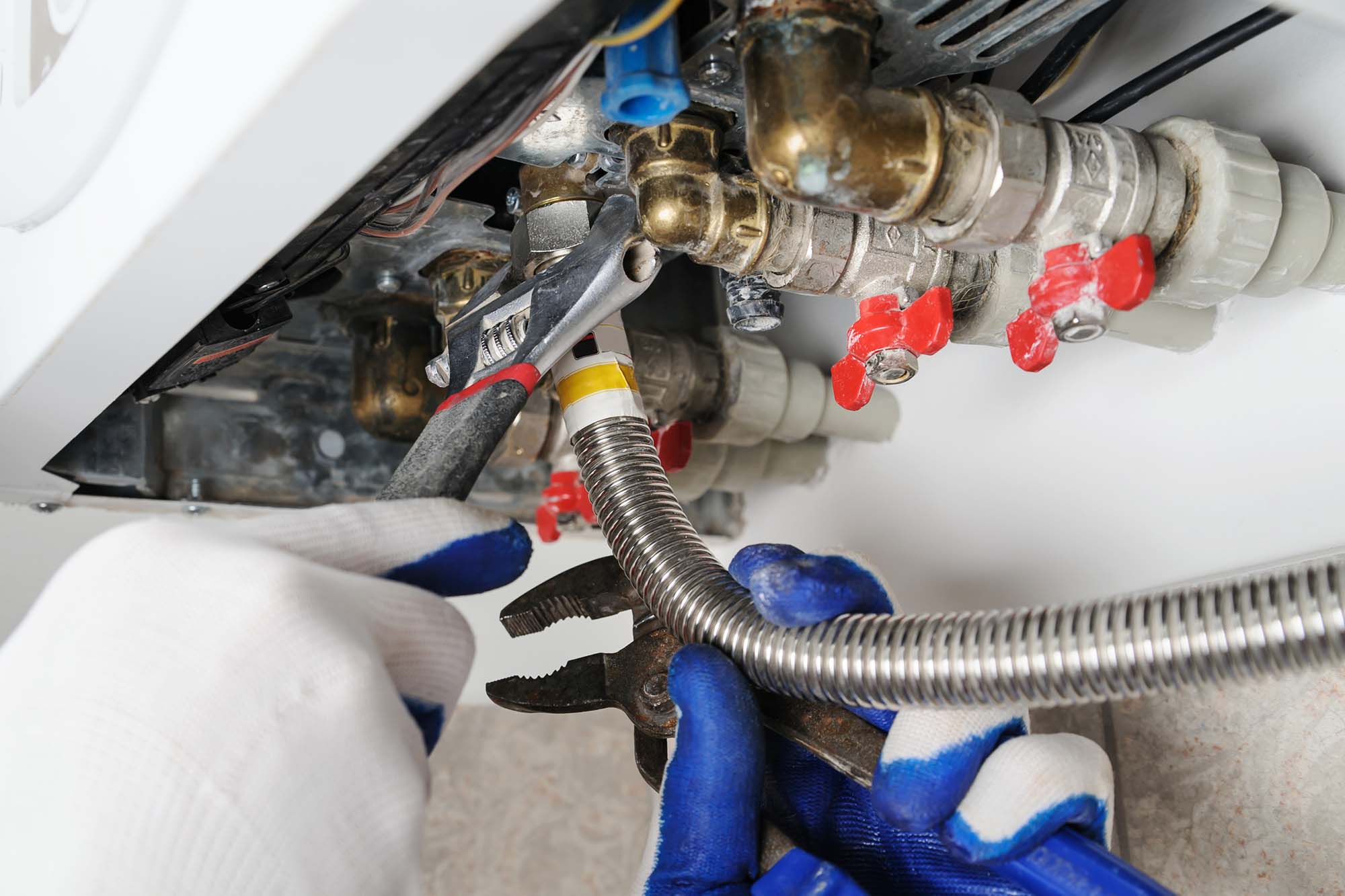
A large share of properties across Berwickshire, the upper Tweed valley and rural East Lothian run on heating oil, because the gas grid simply does not reach them. Oil is a perfectly good fuel, but it puts more responsibility on the owner than mains gas does: you buy and store the fuel, you own the tank, and you notice the price of every litre.
This guide covers running an oil system well — servicing, the tank, buying sensibly, the faults we see most — and where a heat pump fits into the picture.
Servicing is not optional on oil
Oil boilers need annual servicing more genuinely than gas ones do. Combustion produces soot, the nozzle wears and changes its spray pattern, the fuel filter clogs, and efficiency drifts downwards through the year in a way that is invisible until someone puts an analyser on it.
A proper oil service includes replacing the nozzle, changing the fuel filter, cleaning the combustion chamber and baffles, checking the photocell and electrodes, and setting combustion with an analyser. Anything less than that is a look and a wipe. Booking in early autumn means the appliance goes into the heating season clean and correctly set.
Your tank is your responsibility
| Item | What to look for | Why it matters |
|---|---|---|
| Tank material | Plastic (bunded or single skin) or steel | Plastic can craze and split with age and UV |
| Bunding | Integral bund or a built bund wall | Contains a leak; often required by siting rules |
| Age and condition | Splits, bulging, staining, soft spots | Plastic tanks have a finite life |
| Base | Level, continuous, non-combustible | A tank on a failing base will crack |
| Distance to buildings and boundaries | Separation distances apply | Fire safety siting requirements |
| Proximity to water | Burns, ditches, wells, drains | Pollution risk raises the requirement for bunding |
| Filter and valve | Serviceable, no weeps | Cheap parts, expensive consequences |
| Fill point and gauge | Accessible, readable | Prevents overfills and running dry |
Oil spills are a serious matter
A domestic oil leak is an environmental incident, not just an expense. Oil reaching a burn, a ditch, a soakaway or groundwater is reportable to the Scottish Environment Protection Agency, and remediation of contaminated ground is extremely costly. Many household insurance policies limit or exclude this cover, so it is worth checking your own policy.
In practice: check the tank visually every few months, watch for consumption rising without a reason, and treat any oil smell or staining around the base as urgent. If you suspect a leak, stop using the tank, contain what you can, and call for help immediately.
Buying oil sensibly
- Order in late spring or summer where cash flow allows — prices are usually keener out of season.
- Avoid ordering during a cold snap if you possibly can. Demand spikes and lead times stretch.
- Buy in larger loads where the tank capacity allows, as the per-litre rate improves with volume.
- Consider a local buying group; several operate across the Borders and they aggregate orders for better rates.
- Never run the tank to the bottom. Sludge and water sit at the base and drawing them into the line causes a lockout at the worst moment.
- Keep a note of consumption so an unexplained increase stands out.
The faults we attend most
- Lockout after the tank ran low, having drawn sludge or water into the line — needs the line bled, the filter changed and often the nozzle replaced.
- Blocked fuel filter, particularly on tanks that have not been serviced for a couple of years.
- Photocell dirty or failed, so the burner locks out believing there is no flame.
- Water in the tank from a poorly sealed lid or gauge, which causes intermittent, maddening lockouts.
- Sooted-up combustion chamber from a missed service, reducing output and efficiency.
- Frozen or waxed fuel line in severe cold on an exposed run.
Oil versus a heat pump
| Oil boiler | Air source heat pump | |
|---|---|---|
| Replacement pricing | Quoted after a free survey | Quoted after a free survey, before funding |
| Grant funding | None | Home Energy Scotland grant and loan |
| Fuel price exposure | Volatile, bought in bulk | Electricity tariff, monthly |
| Tank and storage | Required, with maintenance duties | None |
| Servicing | Annual, essential | Annual, lighter |
| Emitter upgrades | None | Usually some radiators |
| Carbon | Highest of the common options | Substantially lower |
| Best case for | Short-term replacement, constrained budget | Long-term, with grant funding and insulation |
A sensible position for most oil households
If your oil boiler is sound, service it properly and keep it running while you improve the fabric of the house. Insulation and draughtproofing reduce your oil bill immediately and reduce the size, cost and emitter work of any future heat pump.
When the boiler does reach the end of its life, that is the natural decision point. With Home Energy Scotland funding available for heat pumps and not for oil boilers, and with an improved building fabric behind you, the comparison at that moment often looks very different from how it looks today. We service and repair oil systems and design heat pumps, so we have no reason to push you either way before the timing is right.
Frequently asked questions
- How often should an oil boiler be serviced?
- Annually, without exception. Oil combustion produces soot and the nozzle wears, so efficiency and reliability both degrade measurably over a year of use.
- Do I need a bunded oil tank?
- It depends on siting, capacity and proximity to drains, watercourses and buildings. Bunded tanks are the safer default and are frequently required. We can advise on your specific installation.
- My boiler locked out after a fuel delivery. Why?
- A delivery stirs up sediment at the bottom of the tank, which can then be drawn into the line and filter. It usually needs the filter changing and the line bleeding.
- How long does a plastic oil tank last?
- Plastic tanks have a finite life and degrade with UV exposure and age. Inspect regularly for crazing, bulging or soft areas, and plan replacement rather than waiting for a failure.
Oil service, repair or tank advice
We service and repair oil systems across rural Berwickshire, the Tweed valley and East Lothian, and advise honestly on tank condition.