
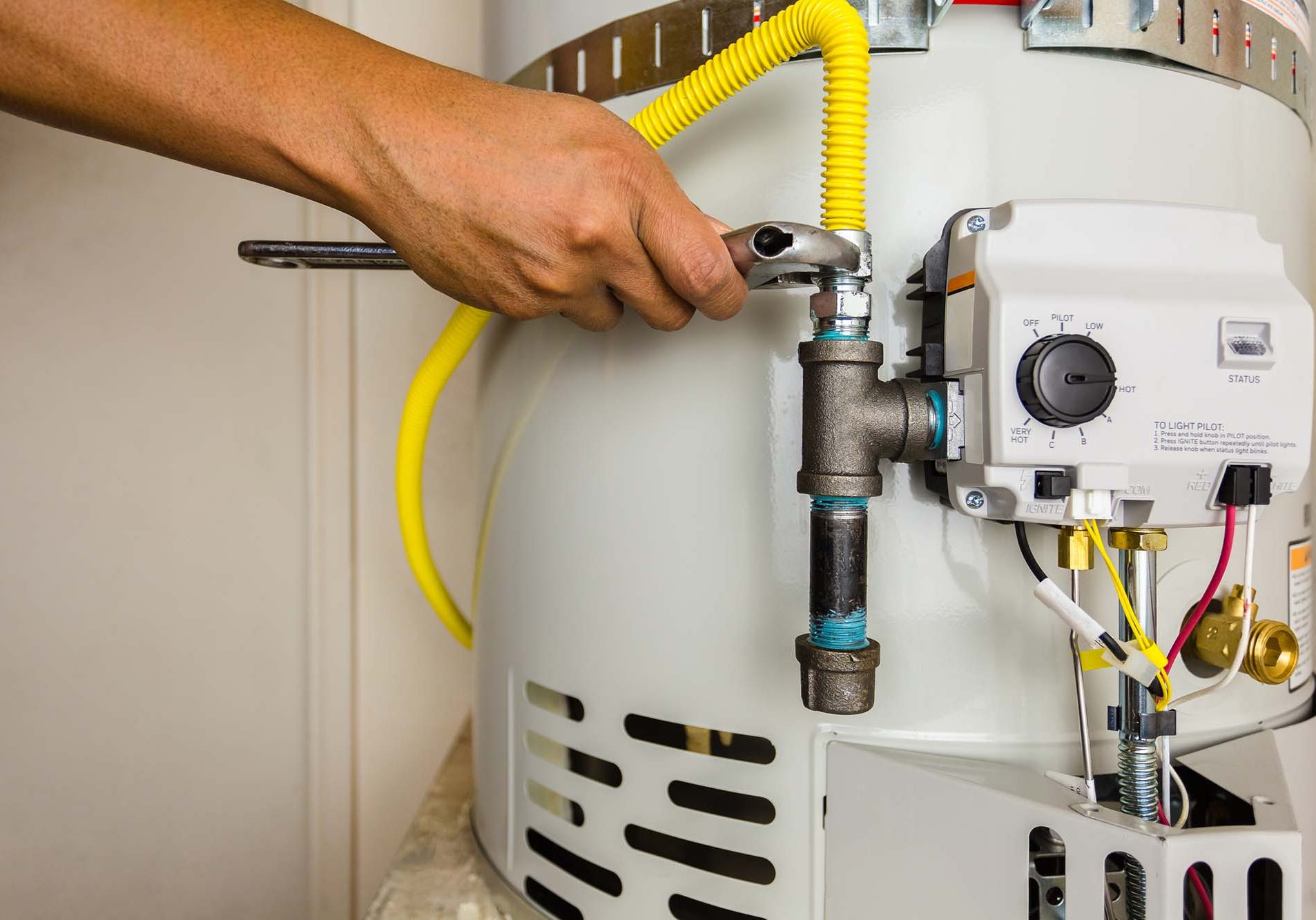
A water-pipe repair needs to address the failed section and why it failed. A leaking joint, a split pipe and corrosion along an older run can require different solutions. Covering the visible drip may reduce the immediate escape without providing a lasting repair or revealing damage nearby.
This guide begins after a leak is suspected or found. It explains how a plumber assesses the pipe, plans access and agrees a permanent repair. It is not a guide to cutting pipes, making joints or working around live electrical equipment. If water is escaping, use the normal internal stop valve only where it is safe and understood, keep clear of electrics and seek help. Gas pipes, unvented safety equipment and pressurised appliance internals are different systems and must not be treated as ordinary water-pipe repairs.
Identify the pipe and the actual source
Water can run along a pipe or across a surface before dripping from a different point. A damp patch beneath a joint does not necessarily prove that joint has failed. The plumber needs to distinguish mains supply, hot water, heating and waste pipework, because the operating conditions and repair requirements differ.
Report when the leak happens, whether it continues with outlets off and whether heating use changes it. Photographs of accessible areas help, but do not remove floors or panels simply to obtain a closer image. If the source is concealed, a tracing stage may be needed first. A repair quote based on an unconfirmed source can miss both the failed component and the required access.
Make the situation safe before remedial work
An uncontrolled leak needs prompt action to limit damage. Close the normal internal stop valve if you know how and it is safe to reach. Do not force a seized valve or interfere with public supply equipment. If water is near electrical fittings, keep away and obtain appropriate professional help rather than touching a wet switch or appliance.
Tell the plumber whether isolation has reduced the escape. Stored water and separate circuits can complicate the result, so a continuing drip does not automatically prove that the valve failed. Move belongings from a safe dry area and record visible damage. Do not rely on a container as a reason to continue using a leaking system indefinitely.
Materials and connections influence the repair
Domestic pipes can use different materials and connection types, including older fittings that do not match a modern replacement directly. Pipe size, condition and manufacturer requirements matter when selecting a sound connection. Mixed materials and previous alterations can make a small visible leak a more involved repair.
A competent plumber assesses the surrounding section as well as the joint itself. A local repair can be appropriate where the remaining pipe is sound. Widespread deterioration, poor support or repeated failures may support a longer renewal. Ask why the proposed length or fitting is suitable rather than judging the job only by the size of the visible hole.
Access should be proportionate and agreed
A pipe beneath a sink is a different job from one under a solid floor or behind a tiled wall. The access plan should explain what must be opened and who will reinstate the finish. Detection can reduce unnecessary disturbance, but it cannot guarantee that every repair happens without opening anything.
Ask about concealed services and the limits of the initial assessment. Homeowners should not cut into walls or excavate suspected routes themselves. A buried supply may involve ownership, other utilities and separate opening-up arrangements. For a rented or shared property, tell the landlord or managing agent before agreeing significant access or replacement work, particularly where responsibility is not yet clear.
Temporary containment is not the final repair
A temporary measure may be appropriate within a professional plan to limit escape while parts or access are arranged. It should have clear limitations and a follow-up stage. Improvised tape, sealant or repeated tightening can conceal continuing deterioration and may fail when operating conditions change.
Ask whether the proposed action is a permanent repair or an interim step. Do not assume that a stopped drip means the underlying pipe is sound. Where water has affected the building, drying and assessment of finishes may be separate from repairing the pipe. The plumbing work and the damage-recovery work should both be understood, without promising that one automatically resolves the other.
Testing after the repair
Once repaired, the relevant supply or circuit needs to be returned to operation in a controlled way and the repaired connections checked appropriately. Hot and cold operation can reveal different behaviour. Any disturbed support, insulation or isolation arrangement should also be considered rather than focusing only on whether the new joint initially looks dry.
Heating-circuit repairs can involve refilling, venting and treatment according to the installation. Gas-appliance work requires a suitably qualified Gas Safe registered engineer, and unvented cylinder work requires appropriate G3 qualifications. These boundaries matter when the leaking pipe is close to other equipment. A general water repair should not become unauthorised work on a safety device or appliance.
Cost factors, records and recurrence
Cost factors include source confirmation, access, material compatibility, replacement length, isolation, testing and making good. This guide gives no price figures. Ask whether tracing and reinstatement are included or quoted separately, and what happens if the exposed pipe is in worse condition than expected.
Keep the findings and photographs where an insurance discussion or shared responsibility may be involved. Insurance cover varies and should be checked before assuming payment for access or restoration. If another leak appears nearby, report the previous repair and the new location rather than requesting the same patch. Repeated failure can be evidence that the wider section needs assessment, not proof that every isolated joint was repaired incorrectly.
Frequently asked questions
- Can a leaking pipe always be repaired in one small spot?
- Not always. The surrounding condition, material and support need assessment. A local repair is appropriate only where it can form a sound lasting connection.
- Is stopping the drip enough to prove the repair is complete?
- No. Relevant operation and connections should be checked, and any temporary measure should have a clear follow-up plan.
- Does the pipe repair include fixing damaged flooring?
- Only if that finishing scope is agreed. Tracing, opening-up, plumbing repair and reinstatement may be separate stages.
- What should I do before the plumber arrives?
- Use normal safe isolation where understood, keep clear of electrics and record visible symptoms. Do not cut pipes or open concealed areas yourself.
Talk to us about your plumbing or heating
Tell us what is happening and what you would like to change. Work and prices are confirmed after we have assessed your system.