
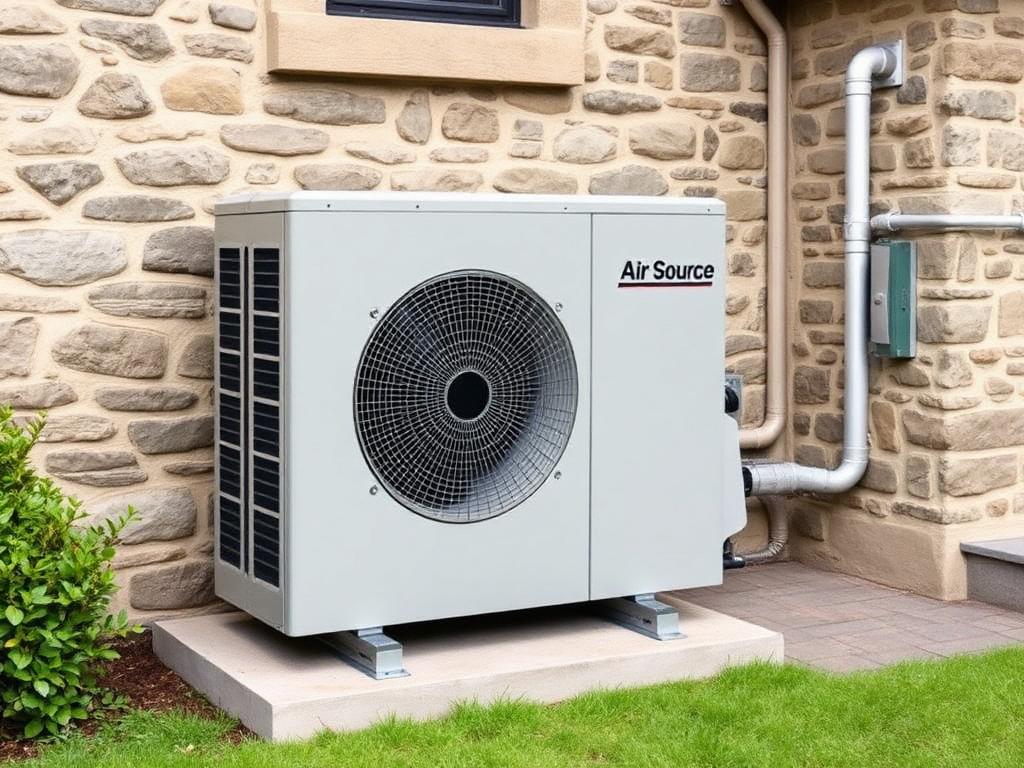
When an oil boiler reaches the end of its life, many homeowners now ask whether to replace it with another oil boiler or move to an air source heat pump. Both can heat a house well. They just work in very different ways, and the right answer depends more on the building than on the technology.
This guide sets out the practical differences: how each system delivers heat, what changes in the house, where funding fits in Scotland and the situations where a straight swap to a new oil boiler still makes more sense.
How the two systems heat a home
An oil boiler burns fuel to produce water at high temperature, often 60 to 75°C, which allows smaller radiators to warm rooms quickly. It is responsive and familiar, and it works the same whatever the weather outside.
An air source heat pump moves heat from outside air into the heating water using electricity. It is most efficient producing lower water temperatures, typically 35 to 50°C, and running for longer periods. Rooms are kept at a steady temperature rather than heated in short bursts.
What usually changes in the house
- Radiators: some may need to be larger to give enough heat at lower flow temperatures.
- Hot water: a heat pump needs a hot water cylinder, usually an unvented one sized for the household.
- Outdoor unit: it needs a suitable position with airflow, a solid base and attention to noise.
- Pipework: undersized or microbore pipes may need upgrading in places.
- The oil tank: once the switch is complete it can be emptied and removed.
Insulation and heat loss come first
A heat pump is sized to the heat the house loses on a cold day. A proper heat loss calculation room by room is the starting point. In draughty or poorly insulated homes the required output and radiator sizes rise, which affects both upfront cost and comfort. Improving loft insulation, draught-proofing and dealing with obvious problems before or alongside the installation often pays back.
Older solid stone houses can work with heat pumps, but they need careful design. A survey should be honest if a property is a poor candidate at present.
Running considerations
Running costs depend on oil and electricity prices, the heat pump's efficiency in your home and your tariff. A well-designed heat pump system can be competitive with oil, while a poorly designed one running at high temperatures will disappoint. Ask any installer to explain the expected efficiency at your design temperatures rather than quoting a headline figure.
Oil boilers need annual servicing, tank checks and occasional fuel deliveries. Heat pumps also need periodic servicing but no fuel storage.
Funding in Scotland
Home Energy Scotland administers grant and loan support for heat pumps and energy efficiency, and the UK Boiler Upgrade Scheme has applied in Scotland too. Schemes, amounts and eligibility change, so check the current rules with Home Energy Scotland before committing, and do not sign a contract that depends on funding until it is confirmed.
When another oil boiler still makes sense
If the existing boiler has failed in midwinter and the house would need major work before a heat pump could perform, replacing the boiler first and planning a heat pump later can be sensible. The same applies where outdoor space, budget or the building fabric are a genuine barrier. A new condensing oil boiler, correctly set up, is more efficient than many older models.
Whatever you decide, record the choice in a longer-term plan so that radiators, cylinders and insulation upgrades move you in the right direction.
What the survey should include
Ask for this in writing. A quote that gives only a unit size and a price, without the design behind it, makes it hard to compare installers fairly.
- A room-by-room heat loss calculation at a stated outdoor design temperature.
- A check of every radiator's output at the proposed flow temperature.
- The size and position of the hot water cylinder.
- A suitable location for the outdoor unit, with notes on noise and access.
- The condition of existing pipework, including any microbore runs.
- An explanation of expected efficiency and how controls will be set.
Living with a heat pump after oil
The biggest adjustment is usually the pattern of heating. Instead of the boiler firing hard morning and evening, a heat pump tends to run gently for longer periods, holding the house at a steady temperature. Radiators feel warm rather than hot. Most households find the comfort good once they stop turning the heating up and down, and the installer should spend time explaining the controls at handover.
Hot water is heated to a set temperature on a schedule, and the cylinder is periodically heated higher to protect against legionella. Understanding these settings helps keep running costs sensible.
Frequently asked questions
- Will a heat pump heat my house as well as oil?
- If it is sized from a proper heat loss calculation with suitable radiators, yes. Comfort problems usually come from undersized systems or poor design.
- Do I need new radiators?
- Not always. Some rooms may need larger radiators to work at lower temperatures; the survey identifies which.
- What happens to my oil tank?
- Once the heat pump is running, the tank can be emptied and removed safely, usually as part of the project.
- Is there funding for switching from oil?
- Support has been available in Scotland through Home Energy Scotland and the Boiler Upgrade Scheme. Check current eligibility before you start.
Talk to us about your heating or plumbing job
Tell us what is happening and what you would like to change. Work and prices are confirmed after we have looked at your system.