
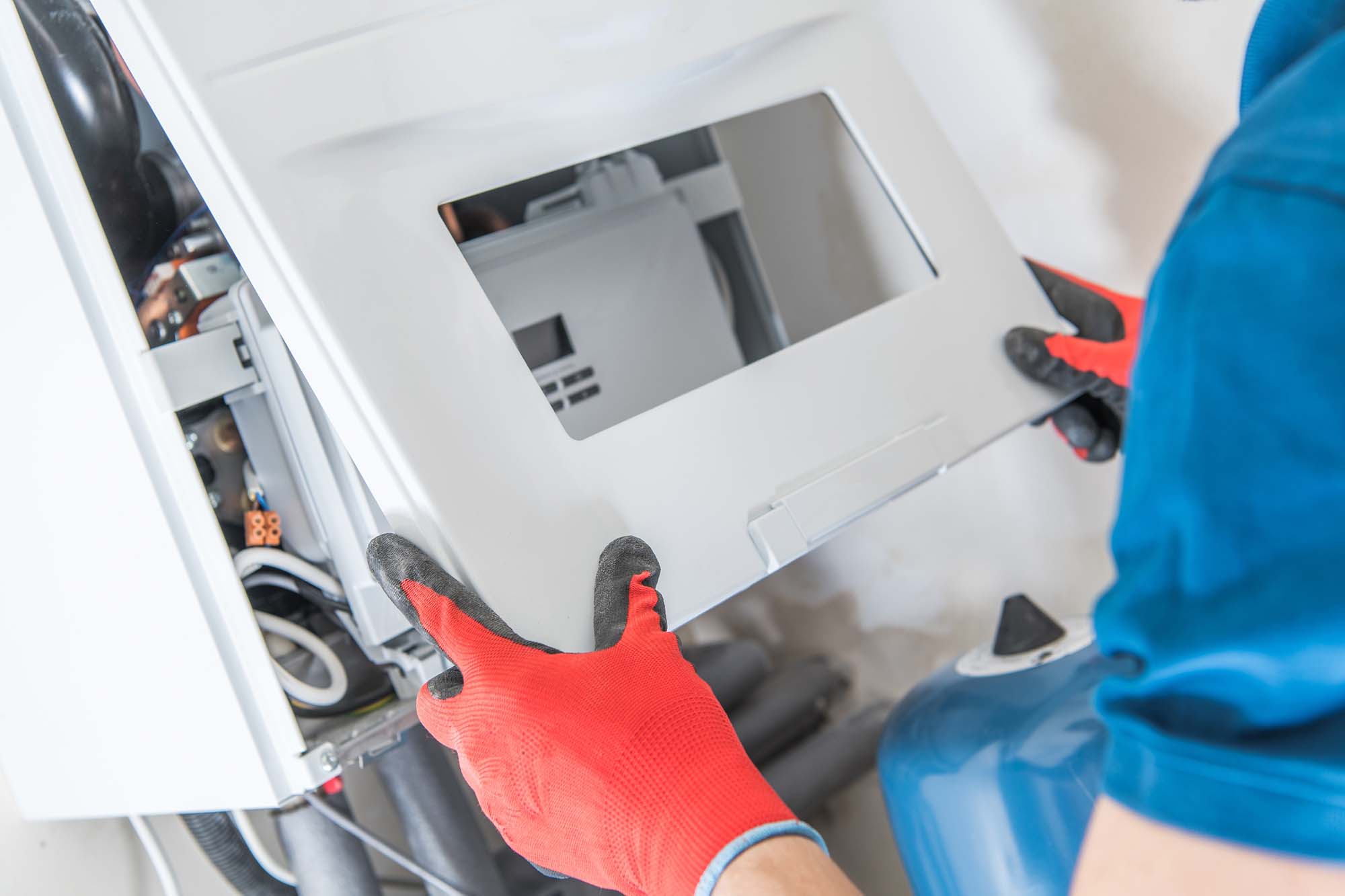
An immersion heater is an electric element inside a hot water cylinder, like a large kettle element. Some homes use it as the main way of heating water, others as a backup when the boiler is off. When it stops working, you may have cold water, lukewarm water, or water that never gets as hot as it used to.
This guide explains how immersion heaters work, common faults and the safe checks you can make. Immersion heaters run on high-current circuits, so electrical work inside the unit must be done by a qualified electrician or competent engineer.
How an immersion heater works
The element is screwed into the cylinder through a boss, with a thermostat inserted alongside it in a pocket. The thermostat switches the element on and off to keep water at a set temperature. Power comes from a dedicated switch near the cylinder, often with a neon indicator, and sometimes through a timer. Some cylinders have two elements, one at the top for quick top-ups and one lower for a full tank.
Unvented cylinders have immersion heaters with additional safety cut-outs and must only be worked on by a competent person, ideally G3 qualified for anything involving the cylinder's safety devices.
Simple checks first
- Is the switch on, and does its indicator light show power?
- Has the circuit breaker or fuse tripped at the consumer unit?
- Is the timer set correctly, with the right time and on periods?
- Has someone turned the boost switch off or changed the settings?
- Has there been a power cut that reset a timer?
Thermostat faults and cut-outs
Most immersion thermostats include a high-limit cut-out that trips if the water overheats. Some have a reset button under the cover. Repeated tripping indicates a faulty thermostat or other problem and should not be ignored. If the water is extremely hot or the cylinder is making boiling sounds, switch off the immersion immediately and get it checked.
A thermostat that fails to switch on gives cold water; one that fails to switch off can overheat water, which is dangerous.
Failed elements
Elements can burn out with age, and hard water speeds this up as scale builds on the surface. A failed element often trips the circuit breaker as soon as it is switched on, or simply produces no heat. Testing an element requires isolating the power and using a meter, which is work for a qualified person.
Replacing an element involves draining the cylinder below the element level, removing the old element with a special spanner and fitting a new one with a fresh seal. On older copper cylinders, care is needed to avoid damaging the cylinder.
Lukewarm water
If water is warm but not hot, the thermostat may be set too low or failing, the element may be partly scaled, or only the top element is running. Sometimes a lot of hot water is being used before the cylinder has recovered. In homes with a boiler, check that the boiler is not also meant to be heating the cylinder and failing to do so.
Running costs
Immersion heaters are simple but heating water with electricity can be costly on standard tariffs. Timers set to use cheaper off-peak periods, where your tariff offers them, and a well-insulated cylinder help. If your boiler or heat pump is the main heat source, use the immersion only as a backup or as the system design requires.
When to call a professional
Call an electrician or plumbing and heating engineer if the circuit keeps tripping, if there is a burning smell, signs of scorching on the switch or cable, leaks around the element, or if the water overheats. For unvented cylinders, always use a competent engineer. Do not open the immersion cover without isolating power.
Hard water and immersion heaters
In hard water areas, limescale builds on elements and in the bottom of cylinders. Scaled elements take longer to heat water, may make crackling or hissing sounds, and fail sooner. Fitting a scale inhibitor or water softener can help. When an element is replaced, the engineer can check how much scale has built up in the cylinder.
Dual elements and switches
Cylinders with two elements often have a switch marked bath and sink, or a separate boost button. The bath setting heats the whole cylinder using the lower element; the sink setting heats only the top portion. If only a small amount of hot water is available, check which setting is selected before assuming a fault. Combined dual immersion elements are also available that fit a single boss.
When the cylinder itself is the problem
Older copper cylinders can corrode and leak, especially around the immersion boss. If there is water dripping from the element area or a green crust has formed, the cylinder may need replacing. A new cylinder can be an opportunity to improve insulation, fit a better immersion and, where suitable, upgrade to an unvented cylinder installed by a G3-qualified installer.
Frequently asked questions
- Why does my immersion heater trip the electrics?
- Often a failed element or damp in the connections. Leave it off and have it tested.
- How long do immersion elements last?
- It varies with water hardness and use. Hard water tends to shorten their life.
- Can I replace an immersion heater myself?
- It involves electrical work and draining the cylinder. Use a qualified person, especially for unvented cylinders.
- What temperature should the immersion thermostat be set to?
- Around 60°C is usual to control legionella while limiting scalding risk at taps.
Worried about your boiler or gas appliances?
Tell us what you have noticed. We confirm what is needed and the price after an engineer has checked the system.