
When a homeowner asks us for a price, the number they get depends on far more than the box on the wall outside. A heat pump installation is a small system redesign: the outdoor unit, the hot water cylinder, the radiators or underfloor loops, the pipework between them, the electrical supply, and the controls that tie it together.
This guide breaks the quote into its component parts so you can see where the money goes and, just as usefully, which parts of the job can be scoped up or down depending on your house. We cover indicative bands by property size further down, but the honest answer is always the same: get a proper survey, because two similar looking houses can price very differently once wall construction and radiator sizing are checked.
The outdoor unit and its kW output
Air source heat pumps are sized in kW of heat output, not by brand or box size. A well insulated three bedroom semi might need somewhere around 5 to 8kW, while a larger or older property with higher heat loss could need 10 to 14kW or more. Bigger is not automatically better: an oversized unit cycles on and off more, which is harder on efficiency and on the compressor, so sizing should follow a heat loss calculation room by room, not a guess based on floor area.
Larger kW outputs generally cost more for the unit itself, and may need a larger electrical supply, so the sizing exercise has a direct effect on the final figure before any other line item is considered.
Hot water cylinder
Heat pumps need a cylinder because they cannot deliver instant hot water the way a combi boiler does. Cylinder cost is driven mainly by litres: a couple with an ensuite might manage on 150 to 180 litres, while a family of four or five with multiple bathrooms is often better served by 210 to 300 litres. If you do not already have a cylinder, or your loft or cupboard space is tight, expect an allowance for the cylinder itself plus the space and pipework changes needed to fit it in.
Radiator and emitter upgrades
Heat pumps work most efficiently at lower flow temperatures, typically in the 35 to 55C range rather than the 70C plus a gas boiler can push out. That usually means some radiators need to be swapped for bigger ones, or double panel units in place of single ones, so the room can still reach temperature at a gentler flow temperature. Underfloor heating is naturally well suited to low flow temperatures and may need little or no change.
The number of radiators affected varies enormously: some houses need one or two swapped, others need most of the ground floor upgraded. This is one of the biggest variables in a heat pump quote and one reason two similar houses can come out at different prices.
Pipework, electrical supply and consumer unit
New pipework runs between the outdoor unit and the cylinder or manifold, plus any pipe upsizing to cope with lower flow temperatures, all add labour and materials. On the electrical side, heat pumps need a dedicated circuit and sometimes a consumer unit upgrade or, in a minority of cases, confirmation from the electricity network operator that the supply can take the extra load.
Groundworks, base and siting
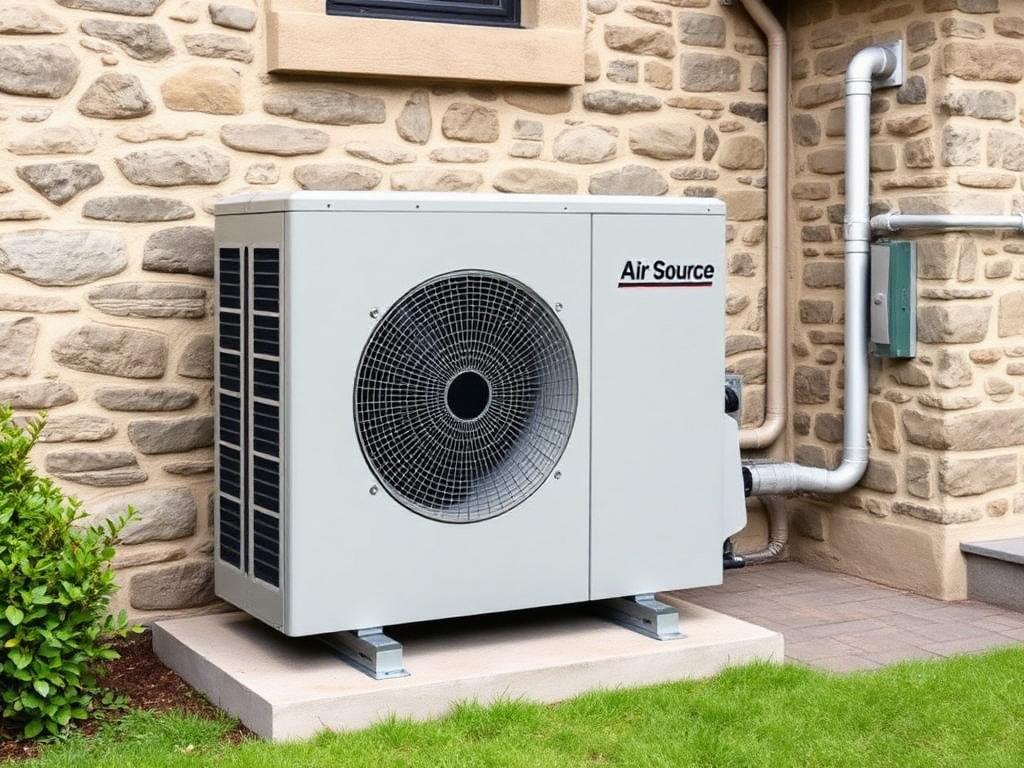
The outdoor unit needs a stable, level base, whether that is a simple paving slab arrangement or a purpose made bracket off a wall where ground space is tight. Pipework runs into the house, condensate drainage away from the unit and any screening for noise or appearance all add a smaller but real cost, and siting decisions affect both this and how the unit sounds to you and your neighbours.
Controls and commissioning
A heat pump is only as good as its controls. Weather compensation, zone control and a properly commissioned system with the flow temperature and heat curve set correctly for your house all affect day to day running cost. Commissioning time is part of the quote, not an afterthought.
Indicative cost bands by property size
| Property type | Typical output needed | What tends to drive the price |
|---|---|---|
| Two bedroom flat or terrace, good insulation | 4 to 6kW | Cylinder space, one or two radiator changes |
| Three to four bedroom semi or detached | 6 to 10kW | Radiator upgrades, cylinder size, pipework runs |
| Larger or older detached, solid wall | 10 to 16kW | Fabric heat loss, multiple radiator changes, electrical supply |
Scottish funding can offset the total
Scottish homeowners may be able to reduce the net cost through Home Energy Scotland, which administers a grant and an optional interest free loan on behalf of the Scottish Government. Funding routes and figures change, so treat any number you see as a starting point and check current terms with Home Energy Scotland before you budget against it.
Frequently asked questions
- Why do two quotes for the same size of house differ so much?
- Usually because one includes more radiator changes, a bigger cylinder, or extra electrical work that the other has not scoped. Always ask what is included line by line.
- Does a bigger house always mean a bigger bill?
- Not always. A newer, well insulated large house can sometimes cost less to convert than an older, smaller one with poor fabric and undersized radiators.
- Is the cylinder always extra on top of the headline price?
- It should be included in a proper quote if you do not already have a suitable one. Ask specifically whether the cylinder and any airing cupboard work is in the number you have been given.
- Can I do the installation in stages to spread the cost?
- Some elements, such as radiator upgrades, can sometimes be phased, but the heat pump, cylinder and controls generally need to go in together as one commissioned system.
Want a price built for your actual house, not a generic estimate
Send us a few details about your property and we will arrange a survey to put together a proper, itemised quote.