
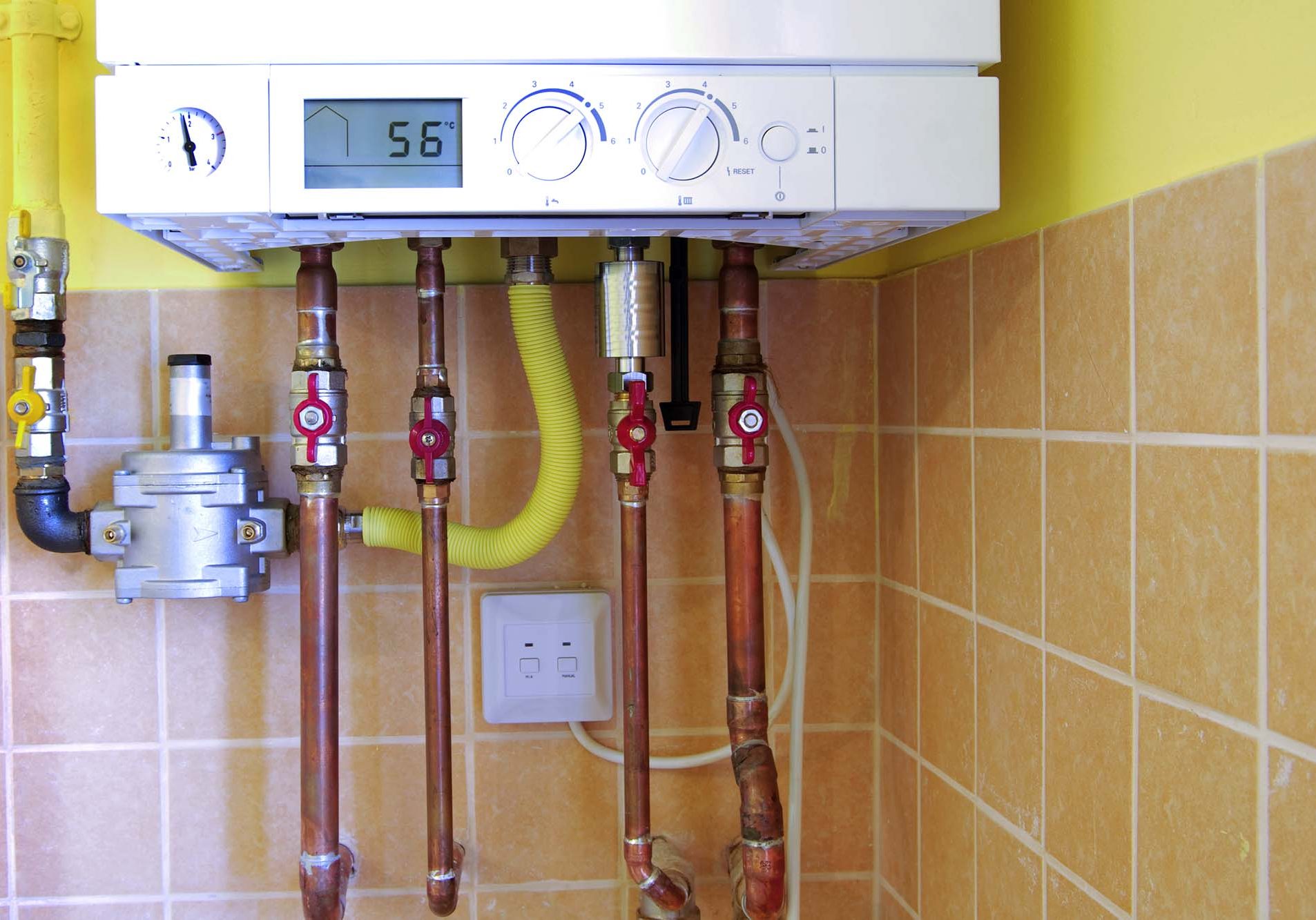
Most landlords have never watched a gas safety check from start to finish, which makes it hard to judge whether the one they paid for was thorough. This page walks through the visit appliance by appliance so you know what a proper check looks like and roughly how long it should take.
The underlying logic is simple. Gas has to arrive without leaking, burn correctly, and have its products of combustion taken safely outside, with enough air to do it. Every test in the visit belongs to one of those four ideas.
The installation itself, before any appliance
- A tightness test at the meter to confirm the pipework holds pressure with no leakage.
- Standing and working pressure at the meter, so the supply can meet demand.
- Visual inspection of accessible pipework for corrosion, poor support and unsafe modification.
- Confirmation that emergency control valve access is clear and the tenant could reach it.
- Protective equipotential bonding, which is a common and easily fixed finding.
The boiler
- Gas rate and operating pressure against the manufacturer's data plate.
- Combustion analysis with a calibrated analyser, which is the honest measure of whether it is burning correctly.
- Flue integrity and a flue flow test, plus the position and condition of the terminal outside.
- Safety devices and controls, including flame supervision and overheat protection.
- Case seals and the physical condition of the appliance and its fixings.
- Ventilation for the appliance type and the space it sits in.
Gas fires and back boilers
Older fires are where genuine danger is most often found, because they were designed around open flues and rely on the chimney working. The engineer checks the flue flow and spillage, the condition of the catchment space and closure plate, and whether ventilation has been reduced by later draught proofing or window replacement.
A decorative fire the tenant never lights still forms part of the certificate while it is connected. If you do not want to maintain it, the alternative is proper decommissioning.
Cookers and hobs
- Stability and, on freestanding cookers, the restraint or chain where required.
- The flexible connection hose, its type, condition and date.
- Burner performance and flame picture on each ring and in the oven.
- Clearances to surrounding surfaces and any combustible material.
- Ventilation in the kitchen, including whether an extract has been removed.
Carbon monoxide alarms
Scottish let property requires carbon monoxide detection where there is a fuel burning appliance. We check that an alarm is present, correctly sited for the appliance, in date and working, and we note it on the record. It is a small item that becomes a serious one after an incident.
Frequently asked questions
- How long should a proper check take?
- A single modern combi in an accessible cupboard can be done properly in well under an hour. A property with a boiler, a fire and a cooker, or with awkward access to a meter, takes considerably longer. A visit that covers three appliances in fifteen minutes has not tested them.
- Does the engineer need to go outside?
- Yes. The flue terminal position, its clearance from windows and openings, and its condition can only be judged from outside. A check carried out entirely indoors is incomplete.
- Are my tenant's own appliances included?
- The landlord's duty covers the appliances and installation the landlord owns and is responsible for. A tenant's own gas cooker is not your appliance, but the installation and connection it uses still needs to be safe, and the engineer will flag anything dangerous regardless of who owns it.
Book a check that actually covers everything
Combustion analysis, flue and ventilation, every appliance recorded, digital copy the same day.