
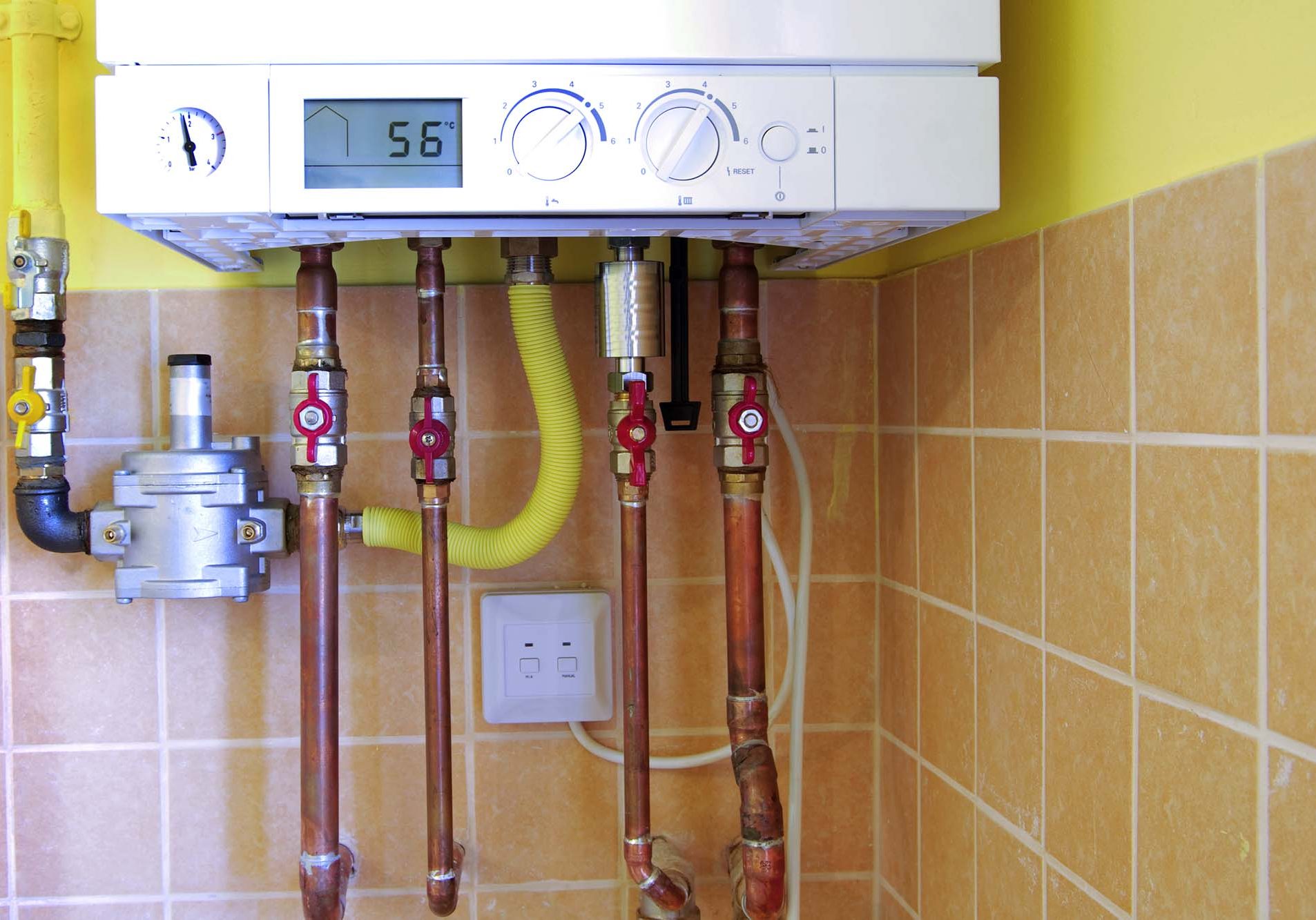
Most modern condensing boilers are built to last around 10 to 15 years, though that range depends heavily on how the system has been looked after, not just the boiler brand.
This guide covers what actually shortens a boiler's working life, the signs that repair is no longer the sensible option, and how to weigh up a repair bill against the cost of replacement.
What shortens a boiler's life
- No inhibitor in the system water, leading to internal corrosion
- Sludge build-up from an unflushed system, restricting flow and overheating the heat exchanger
- Hard water scale on heat exchanger surfaces in areas with harder mains supply
- Missed annual servicing, allowing small faults to go unnoticed and worsen
- A boiler sized wrong for the property, causing short cycling and extra wear on the burner and ignition parts
Signs that replacement is becoming the sensible option
A boiler needing a second or third breakdown call-out within a year is one of the clearest signals, especially once the repairs start involving major components like the heat exchanger or printed circuit board.
Rising gas bills without a change in usage can point to falling efficiency as internal components wear, even before the boiler actually breaks down.
Difficulty sourcing parts is also worth watching for. Once a model is discontinued for long enough, some parts become harder to get quickly, which can turn a simple fault into a longer wait.
Repair economics: age versus typical repair cost
| Boiler age | Typical repair decision | Reasoning |
|---|---|---|
| 0 to 5 years | Repair, usually under warranty | Manufacturer warranty likely still covers parts and labour |
| 6 to 10 years | Repair for most faults | Boiler still has useful life left, repair usually cheaper than replacement |
| 11 to 14 years | Repair minor faults, consider replacement for major ones | Weigh repair cost against remaining expected life |
| 15+ years | Replacement usually the better value | Efficiency is lower, parts availability may be limited, repeat faults likely |
A simple way to weigh it up
As a rough guide, if a single repair quote is running above roughly a third of the cost of a new boiler installation, and the boiler is already past 10 to 12 years old, it is worth getting a replacement quote alongside the repair quote before deciding.
This is not a rule that applies to every situation, a straightforward part replacement on an otherwise healthy boiler can still be the right call even on an older unit, which is why an honest assessment from the engineer doing the repair matters more than the age figure alone.
A maintenance timeline across a boiler's working life
- Year 1: warranty registration confirmed, first annual service establishes a baseline reading for future comparison
- Years 2 to 5: annual servicing, inhibitor level checked, magnetic filter cleaned out at each visit
- Years 6 to 10: watch for gradually rising gas bills, consider a power flush if sludge symptoms appear, expansion vessel pressure checked as it commonly needs recharging around this stage
- Years 11 to 14: parts such as diverter valves, pumps and printed circuit boards become more likely to need replacing, worth budgeting for occasional repairs
- Year 15 onward: efficiency has typically dropped from new, and a repeat fault or major component failure is the point most households start pricing up replacement
Parts availability and obsolescence
Manufacturers generally guarantee spare parts availability for a set number of years after a model is discontinued, but that period varies by brand and component. A common circuit board or pump is usually easy to source even on an older boiler, while a model-specific heat exchanger or a proprietary electronic display can become a genuine wait once the model is well out of production.
If an engineer quotes a longer than usual lead time for a specific part, that is often a sign the model is nearing the end of its supported life, and it is a reasonable prompt to start comparing that repair cost against a replacement quote rather than assuming the same short turnaround every time.
Water quality across the Borders and how it affects lifespan
Mains water hardness varies across the Scottish Borders and East Lothian depending on the local supply source, and harder water accelerates limescale build-up inside heat exchangers and on cylinder coils, which reduces efficiency and increases strain on components over time.
Properties on a private water supply, not uncommon in more rural parts of the area, can also see more variable mineral content and, occasionally, more debris entering the system, which is one reason a magnetic filter and correctly dosed inhibitor matter even more on these installations than on a typical mains-fed town property.
Frequently asked questions
- Does boiler brand affect how long it lasts?
- Build quality varies between brands, but servicing history, water quality and correct sizing usually have a bigger effect on lifespan than brand alone.
- Can a power flush extend a boiler's life?
- Yes, removing sludge and scale that restrict flow reduces strain on the heat exchanger and pump, which can meaningfully extend working life when followed by inhibitor and a magnetic filter.
- Is it worth repairing a boiler that is out of warranty?
- Often yes, particularly for straightforward faults on a boiler under about 10 years old. It becomes less clear-cut as the boiler gets older and faults become more frequent.
- How do I know if my boiler has sludge in the system?
- Cold spots at the bottom of radiators, needing to bleed radiators frequently, and noisy operation are common signs, though a proper diagnosis should confirm it before flushing.
Not sure whether to repair or replace?
We'll give you an honest assessment of your boiler's condition before you spend on either option.