
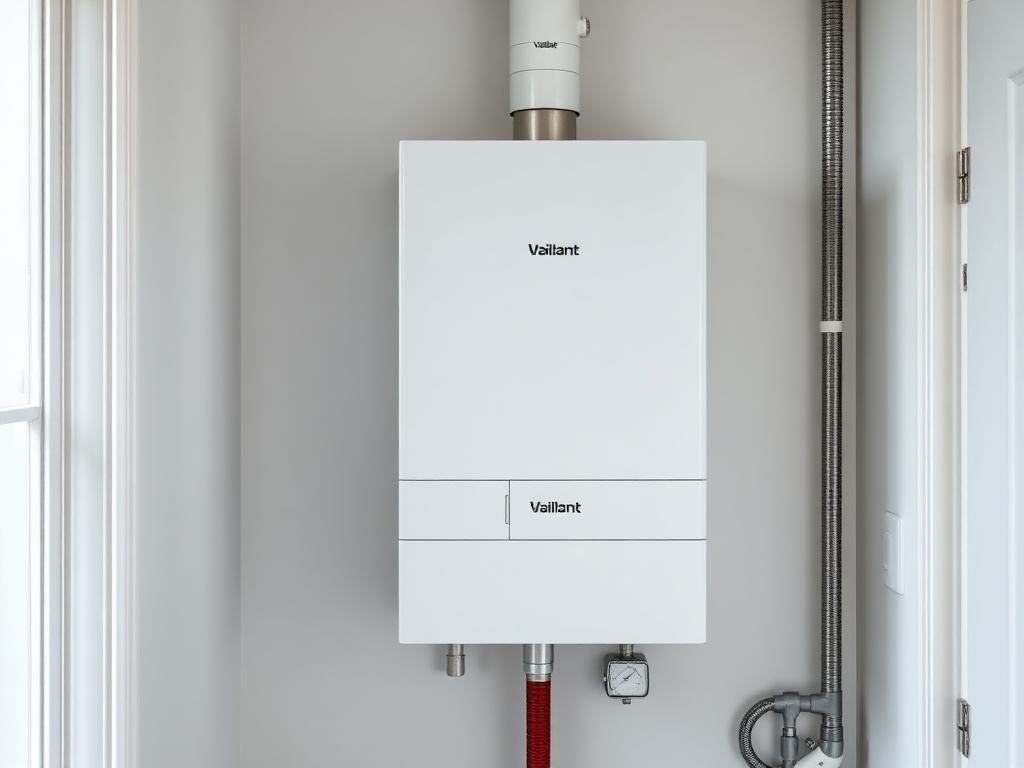
A boiler swap is usually a one-day job, but a lot happens within that day, from protecting your home to the final safety checks before the engineer leaves. Knowing the sequence helps you plan around it, especially if you need hot water access at a certain time.
This guide walks through a typical installation day and what you should have ready beforehand.
The week before: survey, ordering and preparation
By the time installation day arrives, most of the decisions should already be settled from an earlier site survey, including the boiler model, its exact position, whether a flue route or gas pipe upsizing is needed, and whether a power flush is part of the job.
In the days before, the boiler and any parts such as a magnetic filter, condensate pump or flue kit are ordered in, and you should be told roughly what time to expect the engineer and how long the job is likely to take, so you can plan hot water use around it.
- Confirm the exact boiler model, position and any building work agreed at survey
- Check whether a power flush or chemical flush is included, and how long that adds to the day
- Arrange for pets to be kept in a separate room, since doors and floors will be in use all day
- Make sure someone is available for a mid-morning update if the job uncovers something unexpected
Before the engineer arrives
- Clear access to the boiler location and any loft or airing cupboard involved
- Move valuables or delicate items away from the work area
- Know where your stopcock is, in case it is needed
- Have parking or vehicle access arranged if the job needs materials brought in
A typical installation day, hour by hour
| Time | What happens |
|---|---|
| Morning arrival | Dust sheets and floor protection laid, work area set up |
| First hour | System isolated, water and gas supply shut off, old boiler drained down |
| Mid-morning | Old boiler removed, pipework, gas and flue connections assessed and adjusted |
| Late morning to early afternoon | New boiler fitted, connected to gas, flue, condensate and electrics |
| Early afternoon | Magnetic filter fitted, system flushed if agreed as part of the job |
| Mid-afternoon | System refilled, pressure tested, commissioning checks run to manufacturer settings |
| Late afternoon | Controls set up and explained, paperwork completed, handover |
Isolation, drain down and protection
Before anything is disconnected, the water supply to the heating system is isolated and the old boiler and nearby pipework are drained down. Dust sheets and floor protection are put down first, particularly important where the boiler sits in a kitchen or a carpeted area.
Gas, flue and pipework
Gas connections are checked for tightness and correct pipe sizing for the new boiler's input rate, with any upsizing carried out if the original pipework is undersized for the new appliance.
The flue is fitted or reused depending on whether the boiler is being moved, and its termination position is checked against required clearances from windows, doors and boundaries.
Filter, flush and commissioning
A magnetic filter is fitted on the return pipework if one is not already present, and a flush is carried out if agreed as part of the job, particularly on an older system.
Commissioning involves setting the boiler up to the manufacturer's specified flow temperature and gas pressure, checking the flue gas readings, and confirming safe operation of all controls before the engineer signs it off.
Building Standards notification and warranty registration in Scotland
In Scotland, gas boiler installations are notified through the Certification of Design scheme, using a Gas Safe registered installer's self-certification route, which confirms the work meets Building Standards without needing a separate council inspection in most cases.
Separately, the boiler's manufacturer warranty needs to be registered, usually online, using the appliance serial number and installation date. This is what activates the warranty period, so it should happen at the point of installation, not left for later.
Handover and what to keep
At the end of the day, the engineer should talk you through the new controls, confirm the warranty registration, and leave you with the boiler's benchmark or commissioning documentation. Keep this paperwork together, since it is often requested if a warranty claim is ever needed.
Aftercare and checks in the first week
It is normal for a new system to need a small amount of attention in its first few days. Air can work its way to the top of radiators as the system settles, so bleeding a radiator that has gone slightly cool at the top is expected rather than a fault.
System pressure is worth glancing at on the boiler display over the first week, since a small drop as trapped air is released is common, and can be topped up using the filling loop the engineer showed you. A pressure that keeps dropping repeatedly, rather than settling after one top-up, is the point to call back rather than keep topping up.
Most installers will also follow up, or are happy to be contacted, if a fault code appears or a control does not behave as explained, particularly in the first week while you are still learning the new thermostat or app.
Common surprises in older Borders properties
On solid stone or older timber-framed properties, installation day sometimes uncovers things that were not fully visible at survey stage, such as a gas pipe run in worse condition than expected once floorboards are lifted, or a flue route that needs an extra bend to clear a window once the core is drilled.
Old pipework hidden behind a boarded-in cylinder cupboard occasionally turns out to be an outdated size or material, such as old imperial copper, which needs an adaptor or a short replacement section to connect properly to modern fittings. A good engineer will flag this as soon as it is found, explain the impact on time or cost, and get your agreement before carrying on rather than presenting it as a surprise on the invoice.
Frequently asked questions
- Will I have hot water and heating during the installation?
- No, the system needs to be isolated and drained for the work, so expect no hot water or heating until the new boiler is commissioned later in the day.
- How long does a straightforward swap take?
- A like-for-like combi swap typically takes a single working day. Conversions or relocations involving more pipework or flue work can take longer.
- Do I need to be home for the whole installation?
- You should be available at the start for access and again at handover to go through the controls and paperwork, but you do not need to be present for every stage in between.
- Is council approval needed for a new boiler in Scotland?
- A Gas Safe registered installer can self-certify the work under the Certification of Design route for Building Standards, which covers most straightforward boiler installations without a separate council inspection.
- What paperwork should I keep afterwards?
- Keep the commissioning or benchmark documentation and confirmation of warranty registration, as these are commonly needed if you make a future warranty claim.
Got an installation booked in?
Here's what to expect, and if you haven't booked yet, we're happy to talk through the day before you commit.