
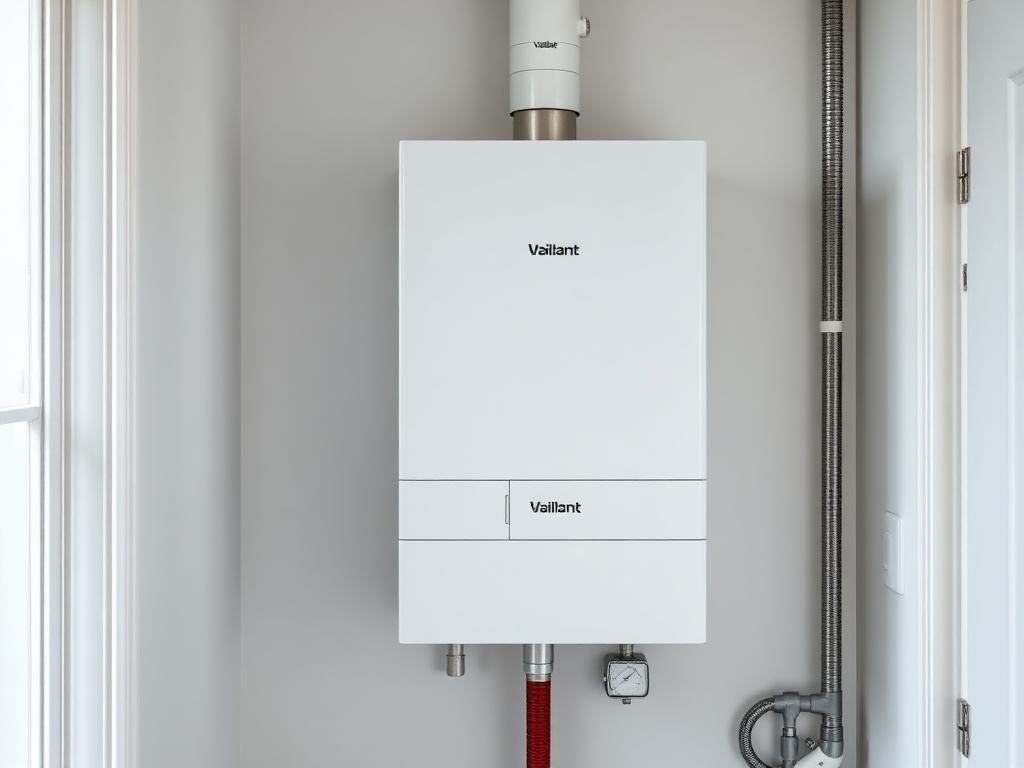
The single biggest decision in a boiler replacement is not the brand. It is the system type. Get it right and the house delivers hot water reliably for twenty years. Get it wrong and you live with weak showers, a cylinder you did not need, or a combi that cannot serve two bathrooms at once.
Here is how the three types actually behave in the sort of properties we work in: Victorian terraces in Galashiels, farm cottages outside Duns, and larger family houses around Haddington and North Berwick.
The three types in one paragraph each
- Combi: heats water on demand, straight from the mains. No cylinder, no tanks, no airing cupboard. Excellent for smaller homes with one bathroom and good mains pressure.
- System: heats a pressurised hot water cylinder. Expansion vessel and pump are inside the boiler; no loft tanks. Good for homes with two or more bathrooms, or where several outlets run together.
- Regular (heat only): the traditional arrangement with a cylinder plus cold water storage tanks in the loft. Usually retained rather than chosen new, but it suits properties with poor mains pressure or gravity-fed legacy pipework.
Side-by-side comparison
| Combi | System | Regular | |
|---|---|---|---|
| Hot water cylinder | None | Yes, pressurised | Yes, plus loft tanks |
| Space needed | Least | Cylinder cupboard | Cupboard plus loft |
| Simultaneous showers | Usually one at a time | Yes, if cylinder sized right | Yes |
| Depends on mains pressure | Heavily | For cylinder refill only | Barely |
| Hot water wait | A few seconds, then endless | Instant until cylinder empties | Instant until cylinder empties |
| Installation pricing | Quoted after survey | Quoted after survey | Quoted after survey |
| Conversion pricing | Depends on pipework and removal | Depends on cylinder and controls | Rarely converted to |
| Best suited to | 1 bathroom, 1–3 people | 2+ bathrooms, family homes | Low mains pressure, listed or rural properties |
Mains pressure is the deciding factor for a combi
A combi can only deliver what the mains gives it. Flow rate matters more than pressure: a combi needs a healthy litres-per-minute figure at the stopcock to produce a shower anyone enjoys. Plenty of rural properties on long private supplies, shared spurs or old lead-replacement runs simply do not have it.
Any installer proposing a combi should measure your incoming flow rate and static pressure before quoting. If they have not, the quote is a guess. Where flow is marginal, a system boiler with an unvented cylinder, or an accumulator, gives a far better result than forcing a combi onto a weak supply. Our guide to low mains water pressure explains what can and cannot be improved.
Bathrooms and household size
The rough rule: one bathroom and up to about three occupants, a correctly sized combi is usually the best answer — simplest, cheapest, no stored water, no cylinder losses. Two bathrooms used at the same time, a bath that needs filling quickly, or a household of four or more, and a system boiler with a properly sized unvented cylinder wins comfortably.
It is worth being honest about usage patterns rather than theoretical capacity. A family of five where everyone showers between seven and eight in the morning has a very different demand profile from a couple who bathe in the evening, even though the house is the same size.
Reasons to keep a cylinder rather than convert
- You have, or may add, solar thermal or an air source heat pump — both need stored hot water, and ripping out a cylinder now means paying to reinstate it later.
- Mains flow rate is below what a combi needs for a decent shower.
- The property has two or more bathrooms in genuine simultaneous use.
- You want hot water to survive a boiler fault — a cylinder with an immersion heater gives you a backup that a combi cannot.
- The airing cupboard is genuinely useful in a damp climate, and removing the cylinder removes the drying space with it.
Reasons to convert to a combi
- You are short of space and would rather have the cupboard back.
- Single bathroom, good mains flow, and no plan to add heat pumps or solar.
- You are tired of running out of hot water because the cylinder is undersized or badly insulated.
- You want to eliminate loft tanks entirely — sensible in properties where freezing pipes in the loft have been a recurring problem.
One decision that outlives the boiler
Whatever you choose, the pipework and cylinder decisions last far longer than the appliance. A boiler is a fifteen-year purchase; the system layout is a thirty-year one. If there is any realistic chance of a heat pump in the next decade, keeping or installing a well-insulated cylinder and generously sized radiators makes that transition straightforward instead of expensive.
We survey, measure the mains flow, count the real hot water demand and then recommend. If a straightforward combi swap is right for your house, that is what we will quote — it is the cheaper job, and we would rather be right than upsell.
Frequently asked questions
- Can I run two showers off a combi?
- Generally not comfortably. A combi splits its flow between outlets, so two simultaneous showers each get roughly half. For genuine simultaneous use, a system boiler with a correctly sized unvented cylinder is the right answer.
- Is a combi cheaper to run?
- It avoids cylinder standing losses, which helps. But a cylinder in a well-insulated modern jacket loses very little, and a system boiler can run at lower flow temperatures more of the time. The difference is smaller than people expect.
- What flow rate does a combi need?
- As a working guide, you want a strong mains flow at the kitchen tap for a satisfying shower — well above the bare minimum an appliance will technically operate on. We measure it on survey rather than estimating.
- Do I need a system boiler for a heat pump later?
- A heat pump replaces the boiler entirely, but it does need a hot water cylinder. Keeping a cylinder and sizing radiators generously now makes a later heat pump installation far simpler and cheaper.
Not sure which type your house needs?
We measure mains flow, count real hot water demand and recommend the system type that suits the property — then quote it in writing.